
If you have seen photos of Bali’s layered rice fields, there is a good chance Tegallalang Rice Terrace was one of them. Located north of Ubud, Tegallalang is known for its steep valley, tiered paddies, coconut trees, and lush tropical surroundings.
It is easy to reach from Ubud, but the real appeal is not simply seeing a green landscape from the roadside. You can walk into parts of the valley, see how the terraces are shaped across the hillsides, and experience a working agricultural landscape that is still part of local life.
The experience also changes depending on when you visit. The light, crowd levels, weather, and stage of the rice cycle can all affect what you see. Here’s what makes Tegallalang special, when to visit for the best experience, and what you should know before planning it into your Bali itinerary.
What Makes Tegallalang Rice Terrace Special?
Tegallalang stands out because it combines an impressive natural landscape with Bali’s long established agricultural traditions. The terraces are not simply decorative scenery created for tourism; they are part of a farming landscape shaped by the terrain, irrigation, and communities that have cultivated rice in Bali for generations.
That combination gives Tegallalang more depth than a typical photo stop. You are seeing the landscape itself, but you can also get a glimpse of the agricultural system behind it.
1. The Landscape: Rice Terraces Built Into a Tropical Valley

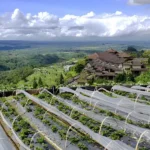
The first thing you notice is the terrain. Instead of a flat field stretching toward the horizon, Tegallalang’s rice paddies follow the contours of a steep valley, creating layers that appear to cascade down the landscape.
Coconut palms and dense tropical vegetation add to the scenery, while the changing elevation gives you different perspectives as you move around the area. From the upper viewpoints, you get the broad landscape; walking farther down can give you a closer look at the terraces and irrigation channels.
This makes Tegallalang particularly appealing for:
- Landscape photography, especially in the softer morning light.
- Short nature walks around the rice terraces.
- A first introduction to Bali’s rice farming landscapes if you are staying in Ubud.
The important distinction is that the terraces are more than a backdrop for photos. Their shape reflects how farmers have adapted rice cultivation to Bali’s hilly terrain.
2. The Subak System Behind Bali’s Rice Landscapes

The terraces also connect to subak, Bali’s traditional cooperative irrigation system. Rather than being simply a method of moving water from one field to another, subak brings together irrigation management, farming communities, and water temples.
UNESCO describes the subak system as a cooperative approach to water management involving canals, weirs, water temples, and farming communities. The system has played an important role in shaping Bali’s cultural landscape for more than a thousand years.
This matters when you visit a rice terrace because the landscape you see is the result of more than the natural shape of the land. Water has to be distributed across different levels of farmland, and that requires cooperation between farmers.
You may therefore notice elements of the agricultural system while walking around the terraces, including:
- Irrigation channels carrying water between fields.
- Small pathways connecting different sections of farmland.
- Farmers working around the paddies.
- Water related religious elements that form part of Bali’s wider agricultural culture.
Tegallalang should therefore be understood as part of Bali’s living agricultural landscape, rather than simply a collection of scenic viewpoints.
3. These Are Still Working Rice Fields
One of the most useful things to understand before visiting Tegallalang is that the rice terraces do not stay bright green throughout the year.
The appearance of the landscape depends on where each field is in its agricultural cycle. At different times, you may see newly flooded paddies, young rice plants, mature crops, or fields that have recently been harvested.
That means the famous emerald green scenery you see in photos is not guaranteed on every visit.
The terraces can look different depending on the stage of cultivation:
- Freshly flooded fields can reflect the sky and surrounding vegetation.
- Young rice plants create the familiar vibrant green appearance.
- Mature rice can give the fields a deeper, more golden tone.
- Recently harvested areas may look much less green and more open.
This is actually part of what makes the landscape interesting. Tegallalang is a working agricultural area, so its appearance changes as farmers plant, grow, and harvest their crops.
It is also worth keeping this in mind when taking photographs. If your main goal is to see intensely green rice terraces, check recent local conditions rather than assuming that a particular month will guarantee the same landscape shown in travel photos.
Best Time to Visit Tegallalang Rice Terrace
The best time to visit Tegallalang Rice Terrace is generally early in the morning, around 7–9 AM. This gives you a better chance of enjoying cooler conditions, softer natural light, and fewer people before the area becomes busier later in the day.
Timing matters here because Tegallalang is an outdoor attraction with limited shade along some walking sections. Visiting early can make a noticeable difference, particularly if you plan to walk down into the valley rather than simply viewing the terraces from the roadside.
Best Time of Day: Aim for the Morning
For most people, 7–9 AM is the sweet spot. The morning offers several practical advantages:
- Temperatures are generally more comfortable for walking.
- Early sunlight can create softer shadows across the terraces.
- Popular viewpoints are usually more manageable before larger groups arrive.
- You have the rest of the day available for nearby Ubud or central Bali attractions.
Morning light is particularly useful if photography is part of your plan. The combination of lower-angle sunlight and the layered terrain can create more definition between the different levels of the rice fields.
If you arrive later in the morning, you can still enjoy Tegallalang, but expect warmer conditions and potentially more people around the main viewing areas.
A practical approach: arrive early, explore the terraces while the temperature is comfortable, then continue to another nearby experience such as Tirta Empul, an Ubud cultural attraction, or a local cooking class.
Best Time Based on the Rice Cycle
There is another factor that is just as important as the time of day: the stage of the rice growing cycle.
Tegallalang’s appearance changes as farmers move through planting and harvesting. So if your expectation is an entirely emerald green landscape, it is better to think in terms of agricultural conditions rather than a guaranteed “green season.”
Depending on when you visit, you may encounter:
- Newly prepared or flooded paddies.
- Freshly planted rice with bright green shoots.
- Taller, mature rice approaching harvest.
- Recently harvested fields waiting for the next planting cycle.
There is no single month that guarantees every terrace will look exactly the same. Different fields can also be at different stages at the same time.
This is one reason not to judge Tegallalang only by Instagram photos. The landscape is constantly changing because it is farmland, and that seasonal variation is part of the experience.
If seeing green rice fields is particularly important to you, the most reliable approach is to check current local conditions shortly before your visit or ask your local guide or driver about the current planting and harvesting cycle.
Things to Do at Tegallalang Rice Terrace
Once you have seen Tegallalang from the viewpoint, the experience does not have to end with taking a few photos and leaving. The terraces are best appreciated from different perspectives, whether you want to walk into the valley, enjoy the scenery without a demanding hike, or simply sit somewhere overlooking the paddies.
The key is to choose activities that match your pace. You do not need to do every swing, photo spot, and walking trail to enjoy Tegallalang. In fact, the rice terraces themselves are the main experience.
1. Walk Into the Rice Terrace Valley

Walking down into the valley gives you a much closer look at the landscape we discussed earlier. From the roadside, the terraces look like a layered green panorama; from inside the valley, you can see how the paths, irrigation channels, farmland, and surrounding vegetation come together.
The walk is not a formal mountain hike, but some sections involve stairs, narrow paths, uneven ground, and changes in elevation. You may also pass farmers working around the paddies, which is a useful reminder that this remains an active agricultural area rather than a purpose-built attraction.
As you walk, you can experience:
- Different perspectives of the terraced fields as the path descends.
- Small irrigation channels connected to the wider agricultural landscape.
- Coconut palms and tropical vegetation surrounding the valley.
- Farmers tending or moving between sections of farmland.
Wear shoes with reasonable grip, particularly if the ground is wet after rain. And if you stop for photographs, stay on established paths and avoid stepping into planted areas.
2. Enjoy the Rice Terrace View From the Ridge

You do not have to walk all the way down into the valley to enjoy Tegallalang.
The viewpoints along the upper section provide expansive views across the terraces and are often the better choice if you are travelling with older family members, young children, or anyone who does not want to deal with steep or uneven paths.
This option works particularly well if your priority is simply to appreciate the landscape and take photographs without spending too much energy walking.
You can:
- Enjoy the panoramic view from the upper terraces.
- Take landscape photographs without descending deeply into the valley.
- Stop at a café or warung overlooking the fields.
- Keep the visit shorter before continuing to another Ubud attraction.
This is also why Tegallalang can work well as part of a wider Bali itinerary. You can experience the landscape without needing to dedicate half a day to walking.
3. Try a Bali Swing

The Bali swing is one of Tegallalang’s most recognisable tourist activities, but it is worth treating it as an optional add-on rather than the main reason to visit the rice terraces.
Different operators offer different swing setups, heights, packages, and photo experiences. Current 2026 listings show considerable variation, with individual swing experiences commonly ranging from roughly IDR 150,000 to IDR 300,000+, while premium or bundled experiences can cost considerably more.
That variation is exactly why we should not publish one fixed “Tegallalang swing price.”
If you want to try one, check what the package actually includes. Some experiences combine the swing with photo platforms, nests, costumes, or photography assistance.
Before riding, look for:
- A proper safety harness and operator briefing.
- Clearly maintained equipment.
- An operator who follows the stated weight and safety limits.
- A package price that explains what is included.
If the swing is not your thing, you are not missing the core Tegallalang experience. The terraces, valley and agricultural landscape remain the main attraction.
4. Stop at a Rice Terrace Café

A café overlooking the rice fields can be one of the easiest ways to slow down after walking through the valley.
Rather than rushing from one viewpoint to another, you can take a break with a coffee, breakfast, fresh coconut, or a light meal while enjoying the landscape from above. Several cafés and warungs are positioned around the terrace area, particularly along the upper edges of the valley.
This works particularly well in the morning because it follows naturally from the timing we recommended earlier: arrive early, explore the terraces, then stop for breakfast or coffee before continuing your route.
For a slower visit, consider allowing 30–60 minutes for a café stop rather than treating it as something you squeeze between attractions.
Read more: 7 Best Breakfast Spots in Bali with Rice Field, Ocean & Sunrise Views
5. Photograph the Rice Terraces
Tegallalang is one of Bali’s strongest landscape photography locations because the composition comes naturally from the terrain. You do not need elaborate equipment to get good photographs; the combination of elevation, layered paddies, palms, and tropical vegetation already creates depth.
The most interesting images usually come from showing the relationship between the terraces and the valley rather than photographing only one section of rice field.
Look for:
- Valley depth, which makes the terraces appear to continue into the landscape.
- Coconut palms, which add vertical contrast to the horizontal rice layers.
- Curved terrace lines, which create natural leading lines.
- Morning light or mist, which can add softer tones and depth.
Indonesia’s official tourism platform also highlights Tegallalang’s layered rice fields as a distinctive photographic landscape and specifically notes the traditional irrigation system behind them.
And remember the point from the previous section: the terraces will not necessarily be emerald green every time you visit. Sometimes the agricultural cycle itself creates a more interesting photograph because flooded paddies, mature rice, and recently harvested fields produce different textures and colours.
Read also: 15 Best Things to Do in Ubud For Ultimate Nature, Culture & Hidden Experiences
Tegallalang Rice Terrace Entrance Fee & Other Costs
The cost of visiting Tegallalang is relatively low compared with many major attractions in Bali, but there is no single price that covers every experience around the rice terraces. This is partly because the area has multiple access points and additional activities such as swings and photo installations are operated separately.
For planning purposes, the most consistent current figure for the main Ceking/Tegallalang walking access is around IDR 25,000 per person, generally paid in cash. Recent 2026 sources independently report this figure.
A practical budget looks roughly like this:
| Expense | Typical Cost | Notes |
|---|---|---|
| Main terrace entry | Around IDR 25,000/person | Current commonly reported main access fee |
| Additional path/local contribution | Around IDR 10,000–20,000 | May apply on some interior paths |
| Car parking | Around IDR 5,000–10,000 | Varies by parking area |
| Scooter parking | Around IDR 5,000 | Varies by location |
| Bali Swing | Around IDR 150,000–300,000+ | Depends on operator and package |
| Photo platforms/nests | Varies | Usually separate from entry |
| Café/warung | Varies | Depends on what you order |
Best Places to Combine With Tegallalang Rice Terrace
Tegallalang works best as part of a wider Central Bali itinerary rather than as a destination you drive to, photograph, and immediately leave. Since we have already established that an early morning visit gives you better conditions, you can use the rest of the day to explore nearby cultural, nature, and culinary experiences.
The best combination depends on how much time you have and what kind of Bali experience you want. The important thing is route efficiency: choose attractions that make sense together instead of filling one day with too many stops.
1. Tegallalang + Tirta Empul
Tirta Empul is one of the most natural pairings with Tegallalang because both can fit comfortably into a Tampaksiring and Central Bali route. After spending the morning around the rice terraces, you can continue to the temple complex and experience a very different side of Bali’s cultural landscape.
Tirta Empul is known for its sacred spring water and purification tradition. If you are interested in Balinese culture, this combination gives the day more depth: Tegallalang introduces you to Bali’s agricultural landscape, while Tirta Empul shows another important part of its spiritual life.
A simple route could look like this:
Ubud → Tegallalang → Tirta Empul → Ubud
This is particularly suitable if you want a day that combines nature, agriculture, and culture without crossing too much of the island.
2. Tegallalang + Kintamani
If your priority is scenery, combining Tegallalang with Kintamani can create one of the strongest rice terrace to highland routes in Central Bali.
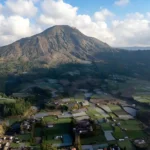
The two destinations offer very different landscapes. Tegallalang gives you the intimate, layered view of rice fields in a tropical valley, while Kintamani opens up to the volcanic landscape around Mount Batur and Lake Batur.
That contrast is what makes the combination worthwhile:
- Tegallalang: terraced rice fields and tropical valley scenery.
- Kintamani: volcanic highlands and Mount Batur views.
- Between them: scenic roads, villages, and agricultural landscapes.
This works especially well if you want to enjoy a cooler highland atmosphere after your morning around the rice terraces.
Just avoid trying to add too many additional attractions on the same day. Kintamani itself covers a broad area, and stopping at multiple viewpoints, cafés, plantations, or hot springs can quickly turn a comfortable itinerary into a rushed one.
3. Tegallalang + Ubud
For a first trip to Bali, Tegallalang and Ubud are arguably the easiest combination because you can experience the rice terraces without moving far from Ubud’s main attractions.
After visiting Tegallalang in the morning, you can return toward Ubud and continue with experiences that complement the natural scenery, such as:
- Sacred Monkey Forest Sanctuary.
- Balinese temples and cultural sites.
- Ubud art and craft areas.
- Rice field or jungle view cafés.
- Local restaurants and wellness experiences.
The advantage is flexibility. If you spend longer walking through the terraces than expected, you do not have to abandon the rest of your day because the route remains relatively compact compared with crossing from one side of Bali to another.
For a relaxed schedule, something like Tegallalang in the morning → Ubud lunch → one or two Ubud experiences in the afternoon is often more enjoyable than trying to visit five or six attractions.
4. Tegallalang + Balinese Cooking Class
A cooking class is a particularly good addition if you want your Tegallalang visit to include more than sightseeing.
After walking through the rice terraces and seeing the agricultural landscape first-hand, learning how local ingredients are used in Balinese cuisine gives the day a more hands-on cultural element.
This combination works well for:
- Families, because children can participate rather than simply follow a sightseeing route.
- Couples, especially if you want a slower cultural experience.
- Food lovers, who want to understand Balinese cuisine beyond restaurant menus.
- First time visitors, looking for an experience they can take home with them.
The timing can work particularly well if the cooking class begins around late morning or midday, although schedules vary by provider. Check the class location before booking so you are not adding unnecessary driving between Tegallalang and the cooking venue.
For more ideas on what to see and do nearby, explore our related guide below.
Practical Tips for Visiting Tegallalang Rice Terrace
Tegallalang is straightforward to visit, but a little preparation makes the experience considerably more comfortable. Keep these practical points in mind:
- Arrive early, ideally around 7–9 AM, if you want cooler conditions and a quieter start.
- Wear shoes with good grip, especially if you plan to walk into the valley.
- Carry small cash in Indonesian rupiah for entrance fees, parking, or local contributions.
- Bring water and sun protection, particularly if you plan to spend more than an hour walking.
- Stay on established paths rather than creating shortcuts through the fields.
- Give farmers space when they are working around the terraces.
- Do not step into planted rice fields just for photographs. The terraces are working farmland, not simply a photo set.
- Be more cautious after heavy rain, when some paths can become slippery or muddy.
Is Tegallalang Rice Terrace Worth Visiting?
Yes, Tegallalang Rice Terrace is worth visiting, especially if you want to see Bali’s traditional rice farming landscape without travelling far from Ubud.
It is most worthwhile when you do more than stop for a quick photo. Arriving early, walking into the valley, enjoying the terraces from the ridge, or combining the visit with Tirta Empul, Ubud, or Kintamani can turn Tegallalang into a much more complete Central Bali experience.
Explore Tegallalang More Comfortably With Marina Bali Tours
The easiest way to visit Tegallalang is to include it in a well planned Central Bali route rather than treating it as an isolated stop. Marina Bali Tours can help you combine Tegallalang with Ubud, Tirta Empul, Kintamani, or other experiences based on your preferred pace.
With our Bali tours, you can enjoy:
- Private Bali tours
- Flexible itineraries
- Experienced local drivers
- Custom day trips
- Comfortable door to door transportation
Whether you want an early morning rice terrace visit followed by Ubud sightseeing or a full day exploring Central Bali, we can help you build a route that makes sense for your time and interests.
Explore Tegallalang at your own pace with Marina Bali Tours.


[…] Tegallalang Rice Terrace: Best Time, Entrance Fee & Things to Do […]
[…] This is one of the most natural pairings for an Ubud coffee plantation tour. The two experiences complement each other without changing the character of your day: start with coffee and the plantation garden, then continue to Tegallalang for the rice terrace landscape. […]
[…] Read more: Tegallalang Rice Terrace: Best Time, Entrance Fee & Things to Do […]