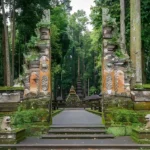
Ubud Monkey Forest brings together three things that are deeply connected in this part of Bali: tropical forest, Balinese Hindu temples and long tailed macaques moving freely through the trees.
Located in Padangtegal, Ubud, the sanctuary feels very different from a typical wildlife attraction because the forest itself remains part of a living cultural landscape.
As you walk beneath the canopy, you will find stone pathways, temple structures, sculptures and monkeys sharing the same space. The experience is not only about seeing the animals up close, but also about understanding the forest and sacred places around them.
Here’s what makes a visit to Ubud Monkey Forest about more than just seeing monkeys.
A Sacred Forest Where Monkeys and Temples Share the Same Space
Ubud Monkey Forest, also known as Mandala Suci Wenara Wana, is a sacred forest and temple complex in Padangtegal, Ubud. The site combines a protected forest environment with several Hindu temples and a population of long tailed macaques.
That combination is what sets it apart from a conventional wildlife attraction. The monkeys are not displayed in separate enclosures, and the temples are not simply architectural exhibits. Both exist within the forest landscape and remain connected to the religious and cultural life of the local community.
The Forest Is Part of the Experience
The first thing you notice is the environment rather than the monkeys themselves.
Dense vegetation creates a shaded landscape around the walking paths, with large trees, exposed roots, stone structures and forested areas throughout the sanctuary. The setting gives you a chance to experience a small piece of Ubud’s tropical landscape while moving between different parts of the site.
The forest also provides the natural environment where the macaques live and move. You may see them climbing through the canopy, resting on stone structures, grooming each other or moving between different areas of the sanctuary.
The Monkeys Live Within the Forest
The macaques at Ubud Monkey Forest are long tailed macaques living in a semi-wild environment.
You may see different social groups behaving naturally as you walk through the sanctuary. Some stay high in the trees, while others come closer to the paths or temple areas.
This is why the experience feels different from seeing monkeys in a zoo. Their movements are not arranged for you, and there is no guarantee that a particular group will be in one place when you arrive.
It also means you should treat them as wild animals rather than pets. Feeding, touching or deliberately provoking them can create unnecessary risks for both you and the animals.
The Temples Give the Forest Its Cultural Character
The forest contains several sacred temple areas used by the local Balinese Hindu community.
Among the best known are Pura Dalem Agung Padangtegal, Pura Beji and Pura Prajapati. Their presence changes the experience considerably: you are not simply walking through a forest inhabited by monkeys, but through a place where nature, religious practice and local traditions overlap.
Some areas are sacred and may have access restrictions. As a visitor, you can appreciate the architecture and atmosphere without treating the temple spaces like ordinary tourist attractions.
Stone Sculptures and Architecture Along the Paths
The forest is also filled with carved stone elements and sculptures that become part of the scenery as you move through the sanctuary.
You may encounter statues, gateways, bridges and temple structures partially surrounded by vegetation. The contrast between weathered stone and dense greenery is one of the visual features that makes the forest particularly distinctive.
Rather than rushing from one monkey encounter to another, take a moment to look at the details around the paths. Some of the most memorable parts of the visit come from seeing how the architecture sits within the forest.
What Can You See Inside Ubud Monkey Forest?


The sanctuary is compact enough to explore on foot, but there is more to see than the monkeys near the entrance. Here’s what you can expect as you make your way through the forest.
1. Long Tailed Macaques
The macaques are naturally the main attraction, and you can often see them at different heights throughout the forest.
Watch for social behaviour such as grooming, playing, feeding and interactions between adults and younger monkeys. Their behaviour can change quickly, so observing from a safe distance is more rewarding than trying to get their attention.
Keep your belongings secure as well. Loose items such as sunglasses, food or small bags can attract unwanted attention from curious macaques.
2. Pura Dalem Agung Padangtegal
Pura Dalem Agung Padangtegal is one of the most important temple complexes within the forest.
The temple is associated with Shiva and remains a sacred place of worship for the local community. Its dark stone architecture, detailed carvings and surrounding forest make it one of the most distinctive areas to encounter during your walk.
Visitors should follow the site’s instructions and respect any areas that are restricted for religious purposes.
3. Pura Beji
Pura Beji is associated with purification and holy water.
Its setting adds another layer to the experience because the temple sits within the same forest environment as the macaques and other natural features.
The temple is primarily a sacred place for the local community, so the best approach as a visitor is to appreciate the setting and architecture while allowing religious activities to take place without interruption.
4. Pura Prajapati
Pura Prajapati has a different religious role from the other temple areas.
It is connected with cremation ceremonies and the local cemetery, reflecting an important part of Balinese Hindu traditions surrounding death and cremation.
You may encounter the cemetery as part of the forest walk, but it should be approached with the same respect you would give any active religious and community space.
5. The Forest Paths and Bridges
Walking is a significant part of the experience.
Paths lead through shaded areas of the forest, passing trees, sculptures, bridges, temple structures and areas where monkeys move freely. Some sections have steps or uneven surfaces, so comfortable footwear is useful.
The route is easy to take at a relaxed pace. You do not need to rush through the sanctuary simply because the monkeys are the headline attraction.
Things to Do at Ubud Monkey Forest
Once you understand the setting, the visit becomes much more than looking for monkeys. Here’s how to experience the forest without rushing through it.
1. Observe the Macaques From a Safe Distance
Spend time watching how the monkeys interact with each other rather than trying to create an interaction yourself.
You may see grooming, feeding, climbing, resting or playful behaviour depending on the group and time of day. Because the animals move freely, every visit can feel slightly different.
Avoid feeding or touching them, and never try to pull a monkey closer for a photograph.
2. Walk Through the Sacred Forest
Follow the designated paths and take in the environment around you.
The combination of tall trees, exposed roots, stone walls and shaded pathways creates a very different atmosphere from the streets and cafés around central Ubud.
Walking slowly also gives you a better chance of noticing smaller details that are easy to miss when you focus only on finding the monkeys.
3. Explore the Temple Areas
Take time to see the temple structures and understand their role within the forest.
You do not need to enter every sacred space to appreciate them. In fact, some areas may be restricted, and respecting those boundaries is part of visiting the site properly.
4. Look Beyond the Main Photo Spots
The most obvious monkey encounters are not necessarily the most interesting part of the visit.
Look at the relationship between the forest and architecture: stone sculptures covered by vegetation, temple gateways framed by trees and macaques moving through a landscape that has religious significance.
This gives you a much fuller sense of what Mandala Suci Wenara Wana actually is.
5. Take Photographs Without Disturbing the Animals
Photography is one of the natural parts of visiting Ubud Monkey Forest, but the best photographs do not require you to get uncomfortably close to a monkey.
Capture the wider setting, temple architecture, forest paths and animals behaving naturally. Leave enough space between yourself and the macaques, and avoid using food or objects to attract them into position.
Ubud Monkey Forest Rules and Safety Tips
Because the macaques move freely around the forest, knowing how to behave around them makes the visit much more comfortable. The sanctuary has clear visitor guidelines, and following them also helps protect the animals and the people around them.
Do Not Feed the Monkeys
Do not offer food to the macaques, even if they approach you.
The monkeys are accustomed to finding food within the sanctuary, while feeding by visitors can encourage aggressive or unpredictable behaviour. Staff manage the animals’ feeding, so there is no need to bring food into the interaction.
Keep Your Belongings Secure
Keep sunglasses, jewellery, food, plastic bags and other loose belongings out of reach.
Macaques are naturally curious and may grab objects that catch their attention. Keeping your bag closed and avoiding unnecessary items in your hands is a simple way to prevent problems.
Keep Children Close
If you’re visiting with children, keep them close while walking through areas where monkeys are active.
Children may naturally want to approach or interact with the animals, so explaining the rules before entering makes the visit easier for everyone.
Respect the Sacred Areas
Remember that the forest is also a religious site.
Follow signs and staff instructions, avoid restricted areas and give ceremonies or worshippers sufficient space. Dress respectfully around the temple areas and avoid treating sacred structures as ordinary photo props.
What Should You Do If a Monkey Approaches You?
Stay calm and give the monkey space.
Do not chase it, grab it, scream at it or make sudden movements. If you need assistance, approach one of the sanctuary staff members rather than trying to handle the situation yourself.
Can You Touch the Monkeys?
No. The macaques should be observed rather than touched or handled.
Even a monkey that appears calm can react unexpectedly, particularly if it feels threatened or is protecting food or a young animal.
Ubud Monkey Forest Entrance Fee & Opening Hours
Ubud Monkey Forest Entrance Fee
For foreign visitors, the current entrance fee is IDR 130,000 for adults and IDR 100,000 for children. The ticket gives you access to the Monkey Forest sanctuary, where you can explore the forest, see the long tailed macaques and walk around its sacred areas.
Ubud Monkey Forest Opening Hours
The Ubud Monkey Forest is open daily from 9:00 AM to 6:00 PM, with the last entrance at 5:00 PM.
If you’re planning to explore the forest properly, don’t treat 5:00 PM as your arrival time. You still need enough time to walk through the paths, see the temple areas and experience the forest before the sanctuary closes.
Best Time to Visit Ubud Monkey Forest
The forest can be visited throughout its operating hours, but your preferred timing depends on how you plan to spend the rest of your day in Ubud.
Morning for a Cooler Forest Walk
Morning is a comfortable time to explore the sanctuary, particularly if you want to walk through the forest before moving on to other Ubud attractions.
The shaded environment helps, but Bali’s humidity can still be noticeable, so light clothing and comfortable footwear are useful.
Midday for a Flexible Ubud Itinerary
A midday visit can work well if the Monkey Forest is one stop between lunch, cultural attractions or other activities around Ubud.
The forest provides plenty of shade, although temperatures outside the canopy can be warmer.
After Rain
Rain can change the character of the forest, making the vegetation feel even more tropical and the paths wetter.
If you visit after rainfall, take extra care on steps, roots and potentially slippery surfaces. A flexible schedule is useful because Ubud’s weather can change quickly.
What Can You Combine With Ubud Monkey Forest?
Ubud Monkey Forest sits in a part of Bali where several cultural and nature experiences can be connected within one itinerary. The best combination depends on how much time you have and where you are staying. Here’s how the route can come together.
1. Ubud Monkey Forest + Ubud Palace
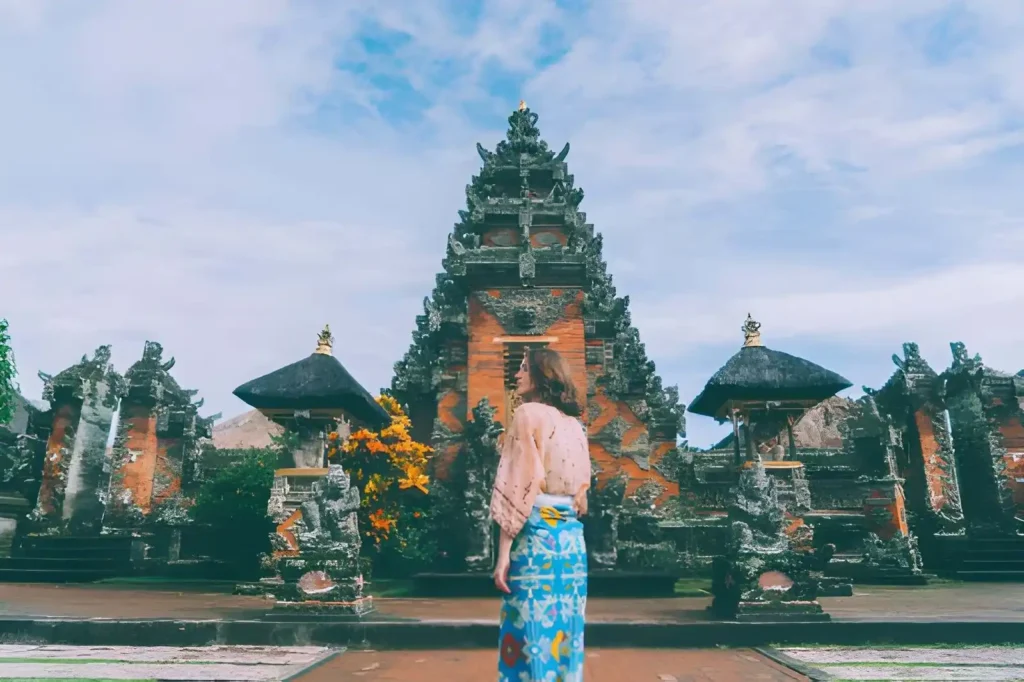
This is a natural combination for a first Ubud day.
Start with the forest, then continue toward Ubud Palace for a different side of Balinese culture and traditional architecture.
The two experiences contrast nicely: one is centered around forest, wildlife and sacred spaces, while the other focuses more directly on Ubud’s royal heritage.
2. Ubud Monkey Forest + Ubud Art Market

If you want to keep the day close to central Ubud, add the art market after the forest.
This creates an easy progression from nature and temples to local crafts, souvenirs and the atmosphere of central Ubud.
3. Ubud Monkey Forest + Tegallalang Rice Terrace

For a stronger nature and agricultural route, continue north toward Tegallalang.
The landscape changes significantly as you leave Ubud’s forested streets and move into rice-growing areas. Because the two destinations are not immediately next to each other, allow enough time for the drive and exploration.
Read more: Tegallalang Rice Terrace: Best Time, Entrance Fee & Things to Do
4. Ubud Monkey Forest + Tirta Empul

This combination works well if Balinese spirituality is a major part of your itinerary.
The Monkey Forest introduces you to a sacred forest and temple environment, while Tirta Empul is a temple complex centered around holy spring water and purification traditions.
They offer related cultural context but very different experiences, so there is value in visiting both rather than treating them as interchangeable temple stops.
5. Ubud Monkey Forest + Kintamani

This can become a full-day Central Bali route if you’re interested in both Ubud and Bali’s volcanic highlands.
The landscape changes considerably between the two areas, from Ubud’s tropical inland environment to Kintamani’s cooler volcanic setting.
Because Kintamani is farther from Ubud, this combination works best when the route is planned in advance rather than added as a last-minute extra stop.
Want to experience more of Ubud beyond the forest? Explore more on our related guides below:
Explore Ubud and Monkey Forest With Marina Bali Tours
Ubud Monkey Forest is easy to add to a Bali itinerary, but the surrounding route can make a big difference to how comfortable the day feels. Instead of treating the forest as an isolated stop, you can place it alongside the Ubud experiences that actually fit your schedule.
With Marina Bali Tours, you can arrange a private Ubud itinerary around your hotel location, preferred pace and interests. Combine Monkey Forest with Ubud Palace, local art and markets, rice terraces, temples or continue toward Kintamani when the route makes sense.
The schedule can also stay flexible, giving you enough time to explore the forest properly without having to rush through the rest of the day.
FAQs About Ubud Monkey Forest
What is Ubud Monkey Forest?
Ubud Monkey Forest, officially known as the Sacred Monkey Forest Sanctuary or Mandala Suci Wenara Wana, is a nature reserve and temple complex in Padangtegal, Ubud. It is home to long tailed macaques and several sacred temple areas.
How much is Ubud Monkey Forest entrance fee?
The current official entrance fee listed by Monkey Forest Ubud is IDR 130,000 for adults and IDR 100,000 for children.
What time does Ubud Monkey Forest open?
Ubud Monkey Forest is currently open daily from 9:00 AM to 6:00 PM, with the last entrance at 5:00 PM.
How many monkeys are in Ubud Monkey Forest?
The sanctuary currently states that approximately 1,054 long tailed macaques live within the forest, divided into seven social groups.
Are the monkeys in Ubud Monkey Forest wild?
The macaques live in a semi-wild environment and are not domesticated pets. Their behaviour can vary, so visitors are expected to maintain a safe distance and follow the sanctuary’s guidelines.
Can you touch the monkeys at Ubud Monkey Forest?
No. Visitors should not touch or pick up the monkeys. The sanctuary recommends maintaining a respectful distance and asking staff for assistance when needed.
Can you feed the monkeys at Ubud Monkey Forest?
No. Visitors are not allowed to feed the macaques. Food is managed by sanctuary staff as part of the animals’ care.
What should you do if a monkey jumps on you?
Stay calm, do not run or make sudden movements, and slowly walk away. You can also ask a Monkey Forest staff member for assistance.
Is Ubud Monkey Forest safe to visit?
It can be visited safely when you follow the sanctuary’s rules. The macaques are semi-wild animals, so keeping your distance, securing food and small belongings, and avoiding physical interaction are important.
What temples are inside Ubud Monkey Forest?
The forest contains three main temple areas: Pura Dalem Agung Padangtegal, Pura Beji, and Pura Prajapati. Some sacred areas are for the local community and are not open for general visitor entry.
Is Ubud Monkey Forest a temple?
Not exactly. It is a nature reserve and sacred forest containing several temple complexes. The temples are part of the cultural and religious landscape rather than the entire attraction itself.
How long do you need at Ubud Monkey Forest?
Allow around 1–2 hours for a comfortable visit if you want to walk through the forest, observe the macaques and see the main temple areas without rushing.
Is Ubud Monkey Forest worth visiting?
Yes, particularly if you want to experience the combination of Balinese culture, sacred temples, tropical forest and macaques in one destination. The experience is more than simply seeing monkeys.
What should I bring to Ubud Monkey Forest?
Bring comfortable footwear, water for before or after entering the sanctuary, and only essential personal belongings. Avoid carrying exposed food or small loose objects that may attract the macaques.