Ultimate Guide To Jatiluwih Rice Terraces: Bali’s UNESCO Heritage Landscape
Jatiluwih Rice Terraces is one of Bali’s most remarkable agricultural landscapes, known for its expansive rice fields, traditional irrigation channels, and panoramic views of the Mount Batukaru foothills. Located in Penebel, Tabanan, in central-western Bali, Jatiluwih offers more than a scenic viewpoint: visitors can walk through the working rice fields and discover the traditional farming system that has shaped the landscape for generations.
The area forms part of Bali’s UNESCO-inscribed Cultural Landscape, recognised for the Subak irrigation system and its connection to the Balinese philosophy of Tri Hita Karana. This makes Jatiluwih especially rewarding for travellers who want to experience both Bali’s natural scenery and its living agricultural culture.
Whether you plan to stop for photographs, follow a walking trail, or spend several hours exploring the countryside, this guide covers what to see, entrance fees, the best time to visit, how to get there, and how to plan a comfortable trip to Jatiluwih Rice Terraces.
Table of contents
Jatiluwih Rice Terraces: Quick Facts
Location: Jatiluwih, Penebel District, Tabanan Regency, Bali, Indonesia
Known for: Expansive rice terraces, Mount Batukaru scenery, and traditional Subak irrigation
UNESCO recognition: Part of the Cultural Landscape of Bali Province, inscribed on the World Heritage List in 2012
Main activities: Walking, photography, cycling, and exploring the agricultural landscape
Entrance fee: The official ticketing website lists IDR 75,000 for foreign adults and IDR 50,000 for foreign children; confirm current rates before visiting
Opening hours: Visitor information lists ticket posts operating approximately 8:00 AM–6:00 PM; confirm current hours locally
Suggested visit duration: Around 2–4 hours, depending on the walking route and activities
Best time to visit: Early morning for cooler temperatures and a better chance of clear mountain views
Nearby attractions: Pura Luhur Batukaru, Bedugul, and the Lake Beratan area
What Makes Jatiluwih Rice Terraces Special?
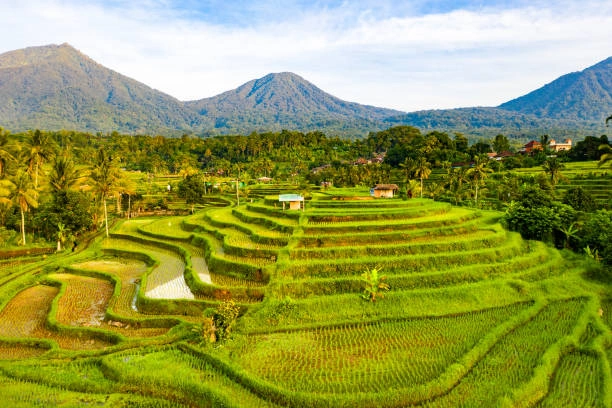
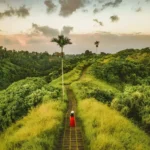
Jatiluwih stands out for the scale of its landscape. Rice fields stretch across rolling terrain, following the natural contours of the land rather than forming a flat, uniform plantation. From the main viewpoints, you can see the terraces extend toward the surrounding hills, with Mount Batukaru providing a dramatic backdrop when the weather is clear.
However, the most meaningful part of Jatiluwih is not simply its appearance. The rice fields are part of an active agricultural landscape maintained by local farming communities. Irrigation channels, field boundaries, water distribution structures, and farming activities are all part of the system that sustains the terraces.
Several features make a visit particularly rewarding:
Expansive rice terraces: The fields follow the contours of the hills, creating layers of green that change throughout the agricultural cycle.
Mountain scenery: Mount Batukaru and the surrounding foothills provide a distinctive backdrop to the landscape.
Traditional irrigation: Water channels and distribution structures show how rice cultivation depends on shared water management.
Walking trails: Marked routes allow visitors to explore beyond the main road and viewpoints.
Living rural culture: Farmers continue to work the land, making Jatiluwih a working agricultural area rather than a landscape created solely for tourism.
The experience also changes with the season. Newly planted fields may appear flooded, growing rice creates varying shades of green, and mature crops can turn golden before harvest. If you visit expecting every field to look identical to photographs online, you may be surprised by how much the landscape changes throughout the year.
Where Is Jatiluwih Rice Terraces?
Jatiluwih Rice Terraces is located in Jatiluwih village, Penebel District, Tabanan Regency, on Bali’s central-western side. The area lies on the slopes of Mount Batukaru, away from the busiest southern resort districts.
Its inland location makes it different from coastal attractions such as Tanah Lot. Jatiluwih is a destination for agricultural scenery, countryside walks, and cultural discovery rather than beach activities.
Ubud is a common starting point for visitors, although the journey can take around 1.5 hours or longer depending on the route and traffic. Travellers staying in Canggu, Seminyak, Kuta, or Nusa Dua should generally allow more time.
Why Is Jatiluwih a UNESCO-Recognized Cultural Landscape?
Jatiluwih is part of the Cultural Landscape of Bali Province: the Subak System as a Manifestation of the Tri Hita Karana Philosophy, which UNESCO added to the World Heritage List in 2012.
This distinction matters because the recognition is not simply an award for beautiful scenery. It acknowledges a cultural landscape shaped by the relationship between agriculture, water management, religious practices, and local communities.
The wider UNESCO property includes several connected landscapes and water temples across Bali. Jatiluwih belongs to the Catur Angga Batukaru landscape, which demonstrates the long-standing role of traditional irrigation and farming in shaping the island’s countryside.
The significance of the landscape comes from several interconnected elements:
Agriculture: Rice cultivation has shaped the land and supported local communities over generations.
Water management: Shared irrigation systems distribute water through interconnected channels and fields.
Religious traditions: Water temples and ceremonies are linked to the management and significance of water.
Community cooperation: Farmers work within local Subak organisations to coordinate irrigation and agricultural responsibilities.
What Is the Subak Irrigation System?
Subak is a traditional Balinese system of cooperative water management associated with rice farming. It coordinates how irrigation water is distributed among agricultural plots and connects farming communities with water temples and religious practices.
In a terraced landscape such as Jatiluwih, water must be channelled across uneven terrain and shared among different fields. The system relies on coordinated decisions rather than treating each plot as an entirely independent unit.
Subak is also connected to Tri Hita Karana, a Balinese philosophy commonly explained through three relationships: harmony between people and the divine, harmony among people, and harmony between people and the natural environment.
At Jatiluwih, this philosophy can be understood through the relationship between farmers, water, land, and religious life. The terraces are therefore not simply a visual arrangement of rice fields. They reflect a cultural system in which agriculture, community cooperation, and spiritual traditions are closely connected.
As you explore the area, look for irrigation channels running beside the fields, small water distribution structures, and farmers working across different plots. These everyday features help explain why the landscape has cultural significance.
Remember that Subak remains a living system. Visitors should respect working fields, follow marked trails, and avoid disturbing farmers or damaging irrigation infrastructure.
What to See and Do at Jatiluwih Rice Terraces
Jatiluwih offers several ways to experience the landscape, from a short stop at the main viewpoint to a longer walk through the terraces. The best choice depends on how much time you have, your fitness level, and the weather.
1. Enjoy the Main Rice Terrace Viewpoints
The main viewpoints provide a broad perspective over the terraced hills and are a convenient starting point for visitors who do not plan to walk far.
From here, you can appreciate the scale of the landscape, observe the changing patterns of the fields, and take photographs of the rice terraces against the surrounding hills.
A short viewpoint stop is suitable if you have limited time. However, the view from the road only reveals part of the experience. If your schedule allows, continue along one of the marked trails to see the irrigation channels and agricultural landscape more closely.
2. Walk Through the Rice Fields
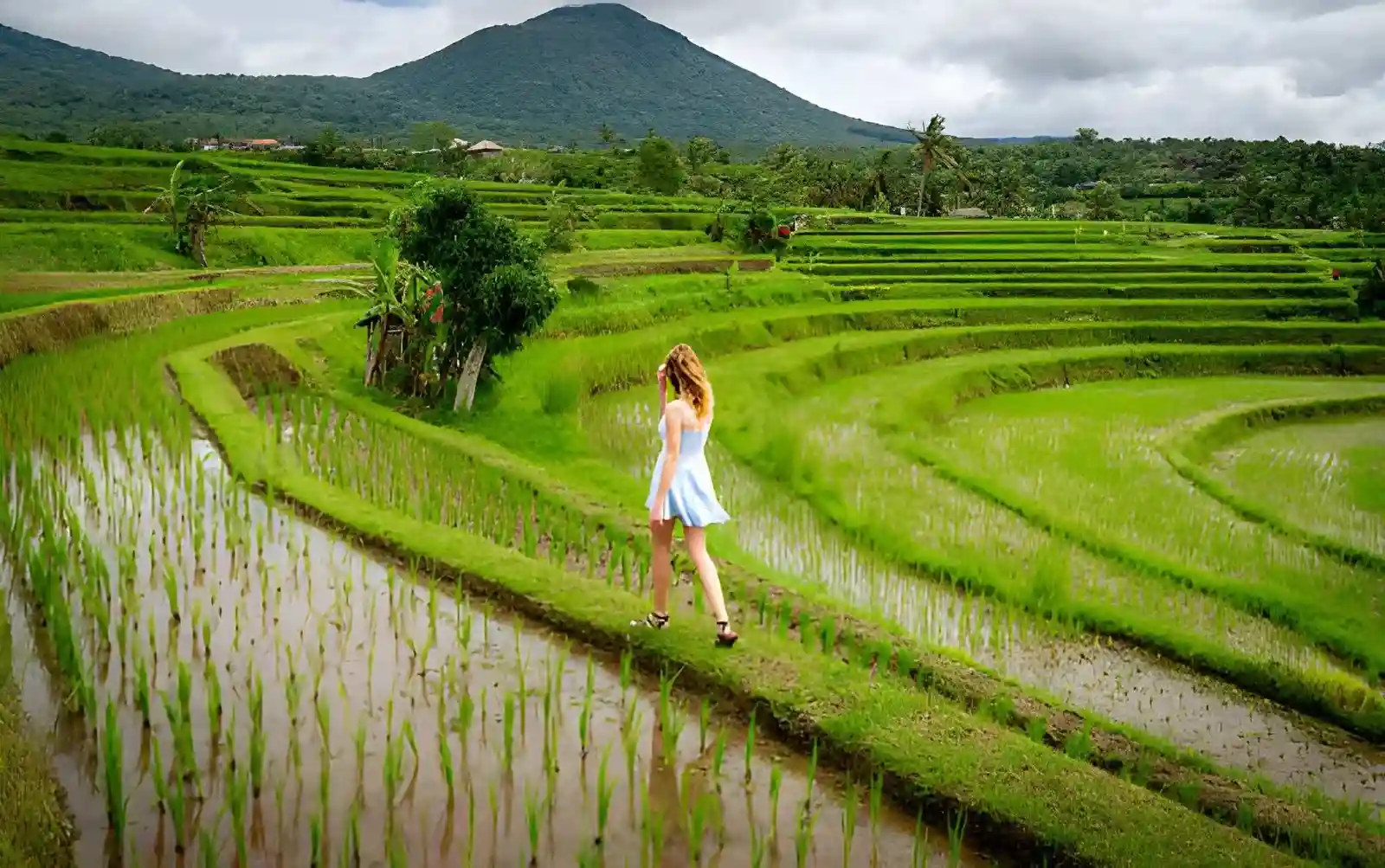
Walking is one of the best ways to experience Jatiluwih beyond its main viewpoints. Marked routes lead through sections of the terraces, allowing you to see the fields from different elevations and observe details that are easy to miss from the road.
Depending on the route, you may pass irrigation channels, farmers’ shelters, field boundaries, and working rice plots. The landscape feels different from within the valley, where the scale of the terraces becomes more apparent.
Choose a route that fits your time and ability. Some trails are relatively short, while longer circuits involve descents, climbs, and uneven surfaces.
Always remain on designated paths. The narrow raised boundaries between rice plots may look like convenient shortcuts, but stepping on them can damage field edges and crops.
3. Photograph the Changing Landscape
Jatiluwih is a rewarding destination for landscape photography because the appearance of the terraces changes with light, weather, and the rice-growing cycle.
Early morning can bring soft light and cooler conditions, while clear periods may reveal Mount Batukaru above the fields. After rainfall, the landscape can appear especially fresh, although wet paths may make walking more difficult.
For more varied photographs, move beyond the main viewpoint when conditions allow. A walk can provide different compositions of the terraces, irrigation channels, and surrounding hills.
Respect farmers’ privacy and avoid entering private plots for photographs. If you want to photograph people at work, ask for permission where appropriate.
4. Explore the Local Farming Landscape
One of the most valuable parts of visiting Jatiluwih is seeing that the terraces remain productive farmland. Depending on the season, you may observe land preparation, planting, growing rice, or harvesting.
Agricultural activities vary across the area, so not every field will be at the same stage. This variation is part of the landscape’s character rather than a sign that the destination is not in season.
Keep a respectful distance from people working, avoid touching crops, and do not enter fields unless access is clearly permitted.
5. Try Cycling or a Guided Countryside Activity
Cycling is another way to explore the wider Jatiluwih area. Local operators may offer cycling experiences or guided activities that follow suitable roads and routes through the countryside.
Availability, duration, prices, and difficulty depend on the operator and package. Confirm what is included before booking, especially if you prefer an electric bike or want a route suitable for beginners.
Cycling can cover more ground than walking, but it is not automatically the best option for everyone. If you want to spend time observing the irrigation system or taking photographs, a walking route may provide a more relaxed experience.
6. Stop at a Local Warung
Local warungs around the visitor area provide a convenient place to rest and enjoy a meal or drink while taking in the countryside.
Eating locally can complement the experience by giving you time to appreciate the landscape without rushing between destinations. Menu choices and prices vary, so check what is available when you arrive.
If you plan to walk one of the longer trails, eat beforehand or carry sufficient water and a suitable snack. Do not assume food and drink will be available once you move deeper into the fields.
Jatiluwih Walking Trails: Which Route Should You Choose?
Jatiluwih has several marked walking routes of different lengths. The routes commonly described by local visitor information include colour-coded options ranging from short loops to longer circuits that take several hours.
Exact duration depends on walking speed, stops, weather, and the current condition of the paths. Use the following guide to choose a route that fits your visit.
Route
Approximate time
Best suited to
Red route
Around 1 hour
Visitors with limited time or those wanting a shorter walk
Yellow route
Around 1–1.5 hours
Visitors wanting a little more exploration without a long hike
White route
Around 2 hours
Travellers looking for a more immersive walk through the terraces
Green route
Around 2.5–3 hours
Walkers with more time and reasonable fitness
Blue route
Around 4 hours
Visitors wanting a longer countryside walk and prepared for a more demanding route
Jatiluwih Rice Terraces Entrance Fee, Opening Hours, and Facilities
An entrance ticket is required to visit the Jatiluwih rice terrace area. The official ticketing website lists the following prices, but you should check the latest tariff before travelling because fees can change.
Ticket category
Published price
Foreign adult
IDR 75,000
Foreign child
IDR 50,000
Domestic adult
IDR 25,000
Domestic child
IDR 15,000
Opening Hours
Jatiluwih Rice Terraces open daily and start at approximately 8:00 AM–6:00 PM daily. Arrive early if you want cooler walking conditions and a better chance of seeing Mount Batukaru before cloud cover builds.
If you intend to take a longer walking route, allow enough time to complete the circuit and return before the ticket area closes. Confirm current access arrangements locally, especially during holidays or unusual weather.
What Facilities Are Available?
The visitor area has basic facilities to support sightseeing and walking, although availability varies by location.
Parking: Parking areas are available near the visitor entrance and main viewpoint.
Restaurants and warungs: Places to eat and drink can be found around the main visitor area.
Walking trails: Marked routes provide access to different sections of the terraces.
Toilets: Basic visitor facilities are available around the main area, but do not assume they will be accessible along the trails.
Cycling and other activities: Local operators may offer additional experiences at separate prices.
Bring cash in Indonesian rupiah for small purchases and local services. Card acceptance and payment options may vary among individual businesses.
The best time to visit Jatiluwih Rice Terraces depends on the rice-growing cycle, weather, and activities you plan to enjoy. For comfortable walking and photography, aim for the morning, when temperatures are generally cooler and the landscape may be less busy.
Best Time of Day
Early morning (around 7–10 AM): A good time for walking, taking photos, and enjoying cooler temperatures before the warmer part of the day.
Late afternoon: Can offer softer natural light for photography. Check the weather and allow enough time to finish your walk before dark.
Midday: Still suitable for a short visit, but longer walks may feel hotter, particularly on exposed trails with limited shade.
Best Months to Visit
April to October (generally drier season): Often more suitable for walking because trails may be less muddy. However, rain can still occur, and clear mountain views are never guaranteed.
November to March (generally wetter season): The terraces can look lush, but rainfall may make some paths slippery. Check local conditions before starting a longer walk.
Rice planting and growing periods: Water levels and the appearance of the fields change throughout the agricultural cycle. Recently flooded paddies may reflect the sky, while growing rice creates greener terraces. Harvest timing varies by field, so there is no single month when every terrace looks its best.
Practical tip: If you want to combine scenic photography with a walk through the terraces, arrive in the morning and check recent weather conditions before travelling. The landscape changes throughout the year, so your experience will depend on both the season and the stage of rice cultivation.
How to Get to Jatiluwih Rice Terraces
Jatiluwih is best reached by road. Most visitors travel by private car, hired driver, scooter, or an organised sightseeing tour. There is no straightforward public transport option that makes the terraces easy to reach for a typical day visitor, so plan your transport in advance.
From Ubud
From Ubud, allow approximately 1.5 hours or more by car as a starting estimate. Traffic, your precise starting point, road conditions, and stops along the way can extend the journey.
A visit from Ubud works well as a day trip if you leave enough time for the drive and choose a walking route that fits your schedule.
From Canggu, Seminyak, or Kuta
Travelling from Bali’s southern resort areas usually takes longer. Depending on traffic and your departure point, allow around two hours or more rather than relying on a fixed arrival time.
If you are travelling from the south, avoid packing too many distant attractions into one day. Jatiluwih is best appreciated when you have enough time to walk and enjoy the scenery.
From Bedugul and Lake Beratan
Jatiluwih can be combined with the Bedugul area and Lake Beratan for a day of exploring Bali’s cooler inland landscapes. The drive from the Bedugul area is generally shorter than travelling from the southern resort districts, although the exact time depends on the starting point.
This combination is practical for travellers who want to see rice terraces, mountain scenery, and cultural attractions in one broader itinerary.
You may also want to explore our Bali Tour Packages to make your visit at Jatiluwih Rice Terrace easier..
Jatiluwih is a working agricultural landscape, so a little preparation will help you enjoy the scenery while respecting the people who maintain it.
Wear shoes with good grip: The trails may include earth, grass, concrete, and uneven surfaces that become slippery after rain.
Bring drinking water: Longer walking routes may have limited access to shops or refreshments.
Use sun protection: Parts of the trails are exposed, and shade may be limited.
Carry a light rain layer: Weather in the hills can change quickly, including during the drier months.
Choose a realistic route: Do not start a long circuit if you have limited time or are unsure about your fitness.
Stay on marked paths: Avoid crossing narrow field boundaries or walking through planted areas.
Respect farmers and crops: Ask before photographing people closely, and never pick rice or other plants.
Keep the landscape clean: Take your rubbish with you and avoid leaving anything in the irrigation channels.
Check activity costs: Confirm prices and inclusions before booking cycling or other paid experiences.
Allow time to return: Finish longer walks with enough daylight and before the visitor area closes.
Responsible Tourism at Jatiluwih
The value of Jatiluwih depends on the continued health of its agricultural landscape and the communities that maintain it. UNESCO has raised concerns about tourism pressure and development in the wider Subak cultural landscape, particularly around Jatiluwih.
Visitors can help by staying on marked trails, avoiding damage to field boundaries and irrigation structures, supporting local businesses respectfully, and treating the area as working farmland rather than a theme park.
Photography is welcome in appropriate public areas, but the rice fields are not simply decorative backgrounds. They are part of a functioning agricultural system that supports local livelihoods and cultural traditions.
Nearby Attractions to Combine with Jatiluwih
Jatiluwih can be combined with several destinations in central and western Bali. Choose attractions according to your starting point and how much time you want to spend at each stop.
1. Pura Luhur Batukaru
Pura Luhur Batukaru is an important Hindu temple on the slopes of Mount Batukaru. Surrounded by forest and a cooler mountain environment, it offers a cultural experience that complements Jatiluwih’s agricultural landscape.
Visitors should dress respectfully, follow temple rules, and check current access requirements before arriving.
2. Bedugul and Lake Beratan
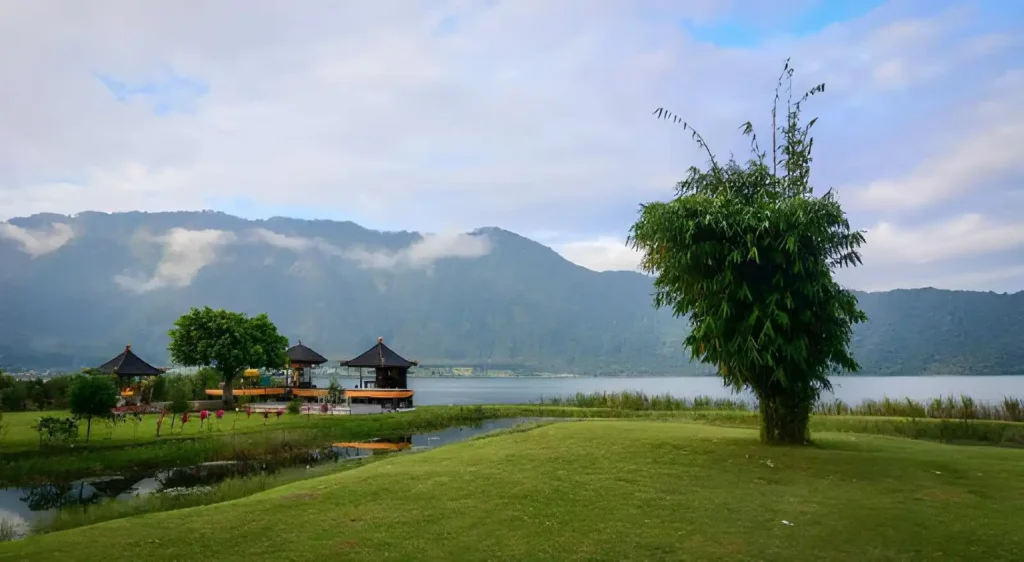
The Bedugul area is known for its cooler climate, mountain scenery, and Lake Beratan. It is a practical option if you want to combine Jatiluwih with another inland destination rather than returning directly to the southern coast.
Allow sufficient time for the drive between stops and avoid trying to cover every attraction in a single day.
Ulun Danu Beratan is a well-known lakeside temple complex associated with Lake Beratan. Its setting offers a different visual experience from the rice terraces, making it a useful addition to an itinerary focused on Bali’s inland landscapes and cultural sites.
Check current ticketing and visitor arrangements before your trip.
Tanah Lot is a coastal temple famous for its ocean setting and sunset views. It is farther from Jatiluwih than the inland attractions, so combining the two is possible but requires careful time planning.
If you want to visit Tanah Lot near sunset, account for the drive, traffic, and time needed to explore Jatiluwih. A less crowded itinerary may be more enjoyable than attempting to fit too many stops into one day.
Yes, Jatiluwih Rice Terraces is worth visiting if you want to experience Bali beyond its beaches, shopping areas, and busy resort districts. The expansive landscape, traditional Subak irrigation system, and marked walking trails make it especially rewarding for travellers interested in nature, photography, rural culture, and gentle outdoor activities.
However, Jatiluwih is more rewarding when you have time to explore on foot. If you only stop briefly for a photograph, you may miss the agricultural and cultural features that distinguish it from other rice terrace destinations. The journey can also be relatively long from South Bali, so combine it with suitable nearby attractions or allow several hours to enjoy the area at a relaxed pace.
Explore Jatiwulih Rice Terrace And More of Bali’s Countryside with Marina Bali Tours
Jatiluwih offers a chance to experience a quieter side of Bali, where expansive rice terraces, mountain scenery, and traditional farming practices remain closely connected. Taking time to walk through the landscape gives you a deeper appreciation of the cultural system behind the views, making it a rewarding stop for travellers interested in more than a quick photograph.
If you are planning to combine Jatiluwih with other destinations, Marina Bali Tours can help you explore Bali through a sightseeing itinerary that suits your travel preferences.
Discover our Bali tour packages and consider including Jatiluwih in a broader journey through Bali’s countryside, cultural attractions, and inland landscapes.
Frequently Asked Questions About Jatiluwih Rice Terraces
Where are Jatiluwih Rice Terraces located?
Jatiluwih Rice Terraces is in Penebel District, Tabanan Regency, on the slopes of Mount Batukaru in Bali, Indonesia. It is located inland from the southern resort areas and is commonly visited as part of a central Bali or countryside itinerary.
Is Jatiluwih Rice Terraces a UNESCO World Heritage Site?
Jatiluwih forms part of the Cultural Landscape of Bali Province, which UNESCO inscribed on the World Heritage List in 2012 for the Subak system and its connection to the Tri Hita Karana philosophy. Jatiluwih belongs to the Catur Angga Batukaru landscape within this wider property.
How much is the entrance fee for Jatiluwih Rice Terraces?
The official ticketing website lists IDR 75,000 for foreign adults and IDR 50,000 for foreign children, alongside lower published domestic rates. Confirm current prices before visiting because tariffs and visitor categories may change.
How long should I spend at Jatiluwih Rice Terraces?
Allow around 2–4 hours if you want to explore the viewpoints and walk one of the marked trails. A shorter visit is possible, but longer routes require more time and preparation.
What is the best time to visit Jatiluwih Rice Terraces?
Early morning, around 7:00–10:00 AM, is a practical choice for cooler walking conditions and a better chance of seeing Mount Batukaru before clouds build. Weather and visibility vary, so check the forecast before travelling.
When are Jatiluwih’s rice fields green?
The appearance of the terraces depends on the planting and harvesting schedule, which can vary between plots. You may see flooded paddies, young green rice, mature crops, or golden fields at different times of the year.
Can you walk through the rice terraces?
Yes. Marked walking trails allow visitors to explore sections of the landscape beyond the main viewpoint. Choose a route that matches your time and fitness, wear shoes with good grip, and stay on designated paths to protect crops and irrigation infrastructure.
Is Jatiluwih suitable for children and older visitors?
A short visit to the main viewpoints may suit many visitors, but walking routes vary in length and difficulty. Longer trails can involve uneven ground, descents, and climbs. Choose the route carefully and confirm current access conditions if mobility is a concern.
Can I visit Jatiluwih and Ulun Danu Beratan in one day?
Yes. The two destinations can be combined into a day trip because both are in Bali’s inland region. Allow enough time for the drive and for walking around each attraction, especially if you want to explore a longer Jatiluwih trail.
What should I wear to Jatiluwih Rice Terraces?
Wear comfortable walking shoes with good grip, lightweight clothing, sun protection, and a light rain layer. Conditions can be cooler and wetter in the hills than on Bali’s southern coast.