Tirta Gangga Water Palace is one of East Bali’s most distinctive cultural attractions, combining royal history, landscaped ponds, stone stepping paths, fountains, and natural spring water. Located in Ababi, Karangasem, this former royal water garden is known for its octagonal stepping stones crossing koi ponds, its ornate Nawa Sanga fountain, and the lush landscape surrounding the complex.
Built under the last king of Karangasem, Anak Agung Anglurah Ketut Karangasem, Tirta Gangga was designed as a water garden for the royal family and the wider community. Today, it remains a heritage attraction as well as a place with spiritual significance, since its spring water continues to be associated with Hindu religious practices.
If you are planning to visit Tirta Gangga, knowing the current entrance fee, what you can see, whether swimming is allowed, and how to fit the palace into an East Bali itinerary will help you make the most of your trip.
Tirta Gangga Water Palace at a Glance
- Location: Ababi Village, Abang District, Karangasem Regency, East Bali
- Type of attraction: Historic royal water garden and cultural site
- Built: Construction began in the 1940s under the last king of Karangasem
- Size: Approximately 1.2 hectares
- Entrance fee for foreign adults: IDR 90,000
- Entrance fee for domestic adults: IDR 45,000
- Opening hours: 8:00 AM–6:00 PM daily, except Nyepi
- Main highlights: Stepping stones across koi ponds, Nawa Sanga fountain, statues, landscaped pools, and natural spring water
- Swimming: Available in designated pools; included in the published entrance ticket
- Suggested visit duration: Around 1–1.5 hours, or longer if swimming and having a meal
- Best time to visit: Early morning, when the garden is generally more comfortable to explore before visitor numbers build
What Is Tirta Gangga Water Palace?
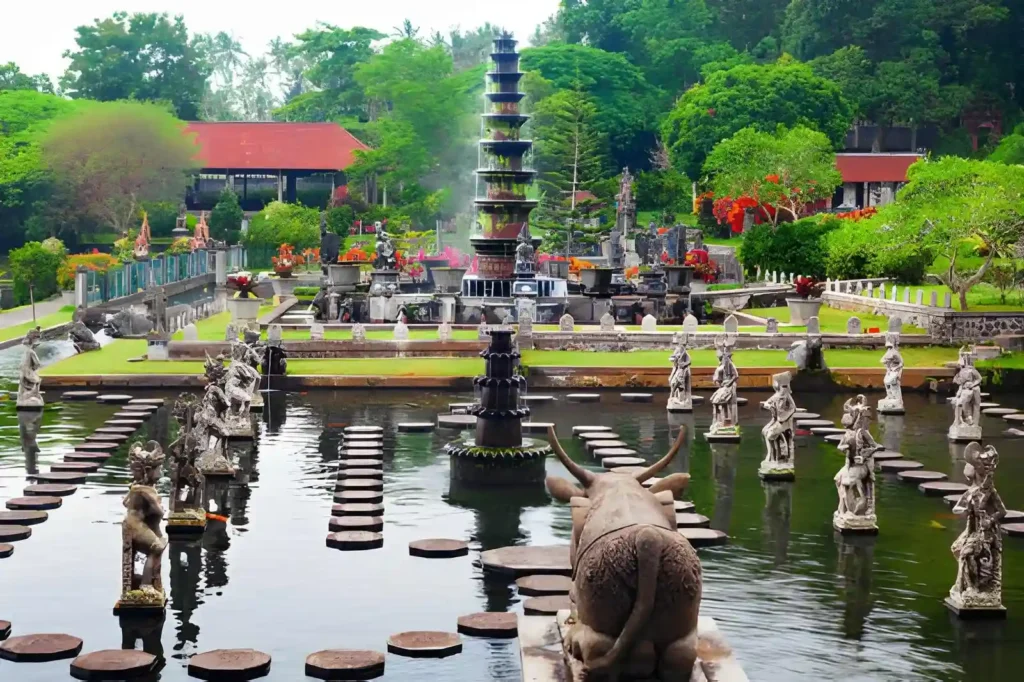
Tirta Gangga is a former royal water garden in East Bali, built around natural springs in the countryside of Karangasem. Its name combines tirta, meaning holy or sacred water, with Gangga, a reference to the sacred Ganges River in India.
The complex brings together water, gardens, stone sculptures, and architectural features associated with Balinese Hindu culture. Rather than a conventional palace building, Tirta Gangga is an outdoor garden arranged across three levels, with pools and fountains connected by paths and stone bridges.
The most recognisable area is the pond crossed by rows of stepping stones. Visitors can walk over the water among koi fish, with statues and fountains creating a distinctive backdrop for photographs.
Beyond its visual appeal, the site has a continuing cultural role. The natural spring at the upper level is regarded as sacred, and spring water is used in religious ceremonies. This makes Tirta Gangga more than a decorative garden: it is a heritage site where tourism and local spiritual traditions exist side by side.
History of Tirta Gangga Water Palace
Tirta Gangga was developed under Anak Agung Anglurah Ketut Karangasem, the last king of Karangasem. Construction began in the 1940s, with the tourism ministry identifying 1946 as the starting point and the site’s management describing major construction work in 1948.
The king was inspired by the natural springs around Rejasa and the surrounding landscape. The garden was created as a recreational retreat for the royal family and a place that could also benefit the wider community.
A Royal Garden Built Around Sacred Water
Water is central to the design and meaning of Tirta Gangga. The spring supplies the garden’s pools and ponds, while its spiritual association connects the complex with Balinese Hindu traditions.
The layout reflects a deliberate arrangement of water features, sculptures, and garden levels rather than a single monumental building. The central fountain, ornamental ponds, and stone figures create a setting in which water and religious symbolism are closely linked.
The garden is also associated with the wider agricultural landscape. Water flowing through the area supports the surrounding environment, showing how natural resources can hold both practical and spiritual importance in Bali.
The 1963 Mount Agung Eruption and Restoration
Tirta Gangga suffered major damage during the earthquakes associated with the 1963 eruption of Mount Agung. Many structures and ponds were damaged, and the royal family faced significant challenges in restoring the garden.
Rehabilitation progressed over the following decades. The king’s son, Anak Agung Made Djelantik, helped lead restoration efforts from 1979, while further work took place from the early 2000s with assistance from foundations and donors.
The garden visible today reflects this restoration history. Although it preserves its royal character and historic layout, visitors should understand that parts of the present complex have been rebuilt or repaired rather than remaining untouched since the 1940s.
What to See at Tirta Gangga Water Palace
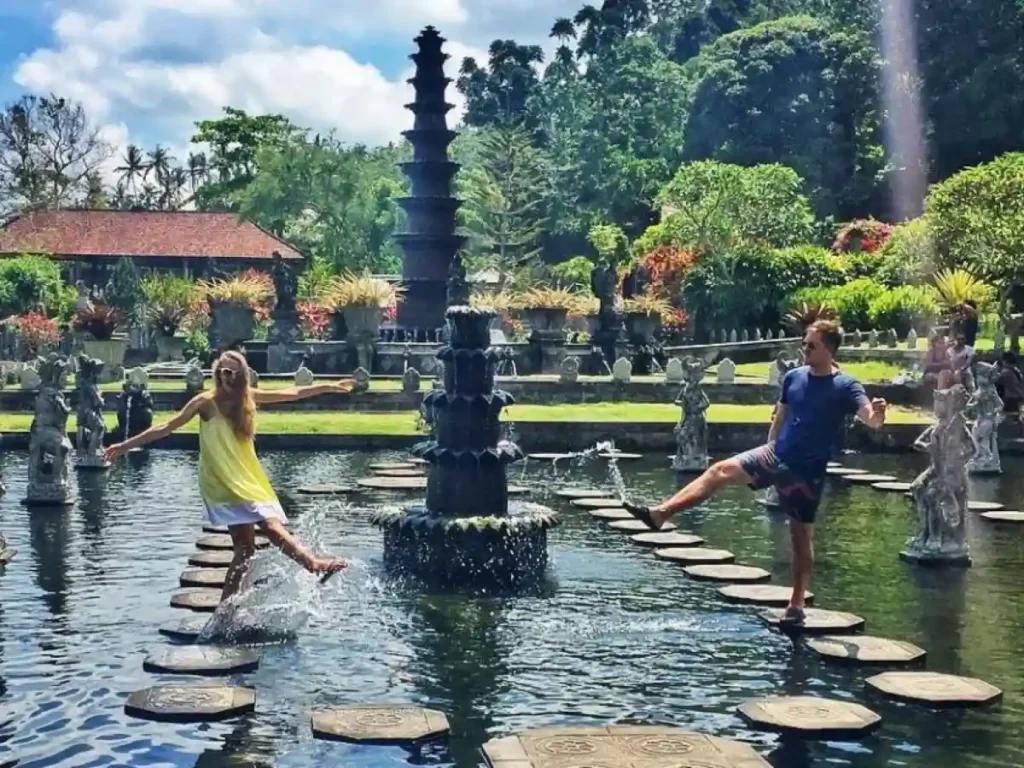
The garden is relatively compact, but its different levels contain several features worth exploring. Take time to walk beyond the famous stepping stones so you can appreciate the relationship between the fountains, ponds, sculptures, and spring water.
The Stepping Stones and Koi Ponds
The stepping stones are Tirta Gangga’s best-known feature. Rows of octagonal stone platforms cross a pond filled with koi, allowing visitors to walk above the water and view the garden from a different angle.
The arrangement creates one of East Bali’s most recognisable photographic scenes, especially when the fountain and statues appear in the background.
Move carefully when crossing the stones. Their surfaces can be wet or slippery, and the stepping route may become crowded when several visitors want to take photographs. Keep your balance, avoid rushing, and give other people enough space to pass.
The Eleven-Tiered Nawa Sanga Fountain
The Nawa Sanga fountain stands at the centre of the garden’s middle level. Its eleven tiers form a prominent vertical feature surrounded by pools and statues.
The name is associated with the nine directions in Balinese Hindu cosmology. Together with the sculptures and surrounding water features, the fountain reflects the garden’s religious and artistic influences.
Spend a moment looking at the fountain from different points along the paths. This provides a better sense of the garden’s layout than stopping only at the most popular stepping-stone photo spot.
The Statues and Decorative Gardens
Stone figures appear throughout Tirta Gangga, including sculptures associated with Hindu stories and symbolic figures positioned around the ponds and fountain.
The combination of statues, water, and tropical vegetation gives the garden its distinctive character. The layout is designed to be explored on foot, so you can move between the different pools and viewpoints at your own pace.
Avoid climbing on sculptures or using sacred structures as photography props. These features are part of the site’s cultural heritage, not decorative objects intended for visitors to handle.
The Natural Spring and Sacred Area
A natural spring lies at the upper level beneath a banyan tree, beside a small shrine. The spring is important to the site’s spiritual identity, and its water continues to be associated with religious ceremonies.
This area should be approached respectfully. If worshippers are making offerings or conducting a ceremony, give them space and follow any instructions from the site staff.
Not every water feature at Tirta Gangga has the same purpose. The sacred spring, ornamental ponds, and designated swimming pools serve different functions, so do not assume that all water areas are open for recreation.
The Designated Swimming Pools
Tirta Gangga also has pools where visitors can swim. These are separate from the ornamental koi ponds and sacred spring area.
The water comes from the natural spring system, making the swimming experience different from using a conventional chlorinated leisure pool. If you want to swim, bring swimwear, a towel, and a change of clothes.
The management’s published tariff states that swimming is included in the entrance ticket. However, pool access can still be subject to site rules, maintenance, or temporary restrictions, so check conditions when you arrive.
The Lower Pond and Jukung Boat Ride
The lower section includes a large ornamental pond with a long island in the middle. Visitors can view the pond from the paths and bridges around it, offering a different perspective from the central stepping-stone area.
A traditional jukung boat ride is also listed as an optional activity. The published fee is IDR 20,000 for one round, separate from the standard experience of walking around the garden.
Ask staff about current availability and the route before paying. The boat ride is optional, so you can enjoy the main garden without adding this activity to your visit.
You may also want to read this: Guide to East Bali: Places to Visit, Things to Do & Travel Tips
Tirta Gangga Entrance Fee and Opening Hours
Tirta Gangga charges an entrance fee, with different rates for foreign and domestic visitors. The official management website publishes the following prices:
| Visitor category | Published entrance fee |
|---|---|
| Foreign adult | IDR 90,000 |
| Foreign adult aged 65 and over | IDR 70,000 |
| Domestic adult | IDR 45,000 |
| Adult with a Bali ID card | IDR 35,000 |
| Foreign child | IDR 45,000 |
| Domestic child | IDR 25,000 |
The published child rates apply to the categories listed by the management. Confirm age requirements and eligibility at the ticket counter, especially if you are travelling with children or qualify for a specific local rate.
Opening Hours
Tirta Gangga is listed as open daily from 8:00 AM to 6:00 PM, except on Nyepi, Bali’s Day of Silence.
Arriving near opening time is a practical option if you want to explore the stepping stones before visitor numbers increase. If you plan to swim or eat at the site, allow extra time rather than treating the garden as a quick photo stop.
What Is Included in the Ticket?
According to the management’s published fee information, access to the designated swimming pool is included in the entrance ticket.
Other activities and services may cost extra. The listed jukung ride costs IDR 20,000 per round, while pre-wedding photography has a separate published fee. Parking, food, drinks, and purchases from vendors should also be budgeted separately where applicable.
Check the latest tariff at the entrance before paying, as prices and included services can change.
You may also want to read this: 10+ Best Temples in Bali for a Spiritual & Scenic Experience (Complete Guide + Tips)
Where Is Tirta Gangga and How Do You Get There?
Tirta Gangga is located in Ababi Village, Abang District, Karangasem Regency, in East Bali. It sits approximately 7 km north of Amlapura, the main town of Karangasem, and is surrounded by rural landscapes and agricultural land.
Its location makes it a natural stop for travellers exploring East Bali, including those staying around Amed or Candidasa. However, the journey from central or southern Bali takes considerably longer than a visit from nearby accommodation.
Getting There from Amed or Candidasa
From Amed or Candidasa, the drive generally takes around 30–40 minutes, depending on your starting point and road conditions.
These coastal areas are practical bases if you want to explore several East Bali attractions over more than one day. You can visit Tirta Gangga in the morning and continue to another destination without spending the entire day travelling from the south.
Getting There from Ubud
The drive from Ubud takes considerably longer than travelling from Amed or Candidasa. Allow roughly 1.5–2 hours as an initial planning estimate, with additional time possible depending on traffic and your exact starting point.
If you are staying in Ubud and want to visit Tirta Gangga, consider combining it with other attractions in East Bali rather than making the journey for the water garden alone.
Getting There from South Bali
Travelling from areas such as Kuta, Seminyak, Canggu, or the Bukit Peninsula can take several hours each way, depending on traffic.
For this reason, Tirta Gangga is best planned as part of a full East Bali sightseeing day. A private driver or prearranged transport can make it easier to combine stops and manage the return journey, particularly if you want to visit several attractions.
Best Time to Visit Tirta Gangga Water Palace
Early morning is generally the best time to visit Tirta Gangga if you want to explore the garden in more comfortable conditions and have a better chance of photographing the stepping stones before the area becomes busy.
The garden is a popular stop on East Bali sightseeing routes, so visitor numbers can increase as tour groups arrive later in the morning. Arriving around opening time gives you more flexibility to explore the different levels before moving on to another destination.
Early Morning for Photos and a More Relaxed Visit
Arriving around 8:00–10:00 AM is a practical choice. The light is often softer than around midday, and the stepping-stone pond may be easier to photograph before queues form.
If you want to swim, an early visit also gives you time to enjoy the garden and use the designated pool without rushing. Bring swimwear and a towel if swimming is part of your plan.
Early arrival does not guarantee an empty garden or perfect lighting. Visitor numbers and weather conditions vary, but starting near opening time gives you more control over your schedule.
Late Afternoon as an Alternative
Late afternoon can be another option if your itinerary does not allow an early start. The garden may have softer light as the day progresses, although conditions depend on cloud cover and the time of year.
Make sure you arrive with enough time to explore before the 6:00 PM closing time. If you are travelling from another part of Bali, allow for traffic on the return journey rather than planning the visit too close to closing.
What About the Dry and Rainy Seasons?
Tirta Gangga can be visited throughout much of the year. The dry season, generally from April to October, is often convenient for outdoor sightseeing because rainfall is typically less frequent.
During the rainy season, the surrounding vegetation can look lush, but rain may make stone surfaces slippery and affect photography. Use extra care on the stepping stones and avoid rushing between pools.
Regardless of the season, check the weather forecast and wear footwear that provides good grip. The most important consideration is whether the conditions are comfortable and safe for walking around the water features.
You may also want to read this: Water Temples in Bali: Sacred Spring Temples & Purification Ritual Guide
Can You Swim at Tirta Gangga?
Yes, swimming is permitted in the designated swimming pools at Tirta Gangga. These pools are separate from the koi ponds and the sacred spring area, which should not be treated as recreational swimming spaces.
The management’s published tariff states that use of the designated swimming pool is included in the entrance ticket. Because access rules and maintenance arrangements may change, confirm that the pool is open when you arrive.
If you plan to swim, bring:
- Swimwear suitable for a public pool
- A towel and a change of clothes
- A waterproof bag for your belongings
- Sandals or footwear for walking between the pool and changing area
Follow any instructions posted around the pools, and do not enter water areas that are marked as restricted. If a religious ceremony is taking place near the spring or shrine, keep a respectful distance and avoid disrupting the activity.
Swimming is optional. You can still explore the garden’s main highlights, including the fountains, sculptures, and stepping-stone ponds, without entering the swimming pool.
Practical Tips for Visiting Tirta Gangga
A few simple preparations can make your visit easier, especially if you plan to take photographs or swim.
- Arrive early. Aim for opening time if you want to explore the garden before visitor numbers increase.
- Watch your footing. The stepping stones and paths beside the water may be wet or slippery.
- Bring swimwear and a towel. These are useful if you intend to use the designated swimming pool.
- Keep valuables secure. Take extra care when crossing the stepping stones, where losing your balance could put belongings into the water.
- Treat the koi ponds as ornamental features. Follow the site’s instructions about feeding fish and do not throw food into the water unless permitted.
- Respect sacred areas. Keep noise down near the spring and shrine, and give worshippers space during ceremonies.
- Allow enough time. Around 1–1.5 hours is a reasonable starting point for exploring the garden; swimming or dining will extend the visit.
- Carry drinking water and sun protection. Much of the attraction is outdoors, so conditions can feel hot during the middle of the day.
- Check the weather. Rain can make stone surfaces slippery, and poor weather may affect your comfort.
- Plan the rest of your East Bali route. Travel times between attractions can add up, especially if you are returning to southern Bali on the same day.
You may also want to read this:Bali Temple Dress Code: What to Wear Before Visiting a Temple
Places to Visit Near Tirta Gangga Water Palace
Tirta Gangga is well suited to a wider East Bali itinerary. If you are already travelling to Karangasem, consider adding one or two nearby destinations rather than trying to visit every attraction in a single day.
1. Taman Ujung Water Palace
Taman Ujung, also known as Taman Soekasada Ujung, is another historic water garden associated with the Karangasem royal family. Its landscaped pools, bridges, and architectural structures create a different experience from Tirta Gangga.
The two gardens complement each other well if you are interested in royal history and water-garden design. However, allow enough travel time between them and check the latest opening hours before setting off.
2. Lempuyang Temple
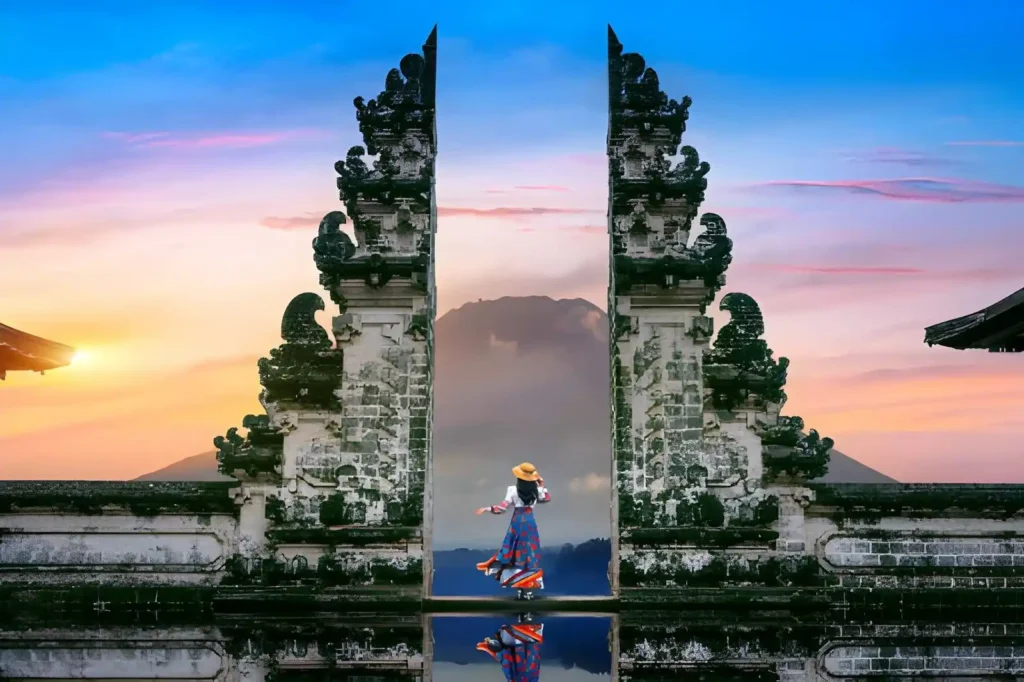
Lempuyang Temple is one of East Bali’s best-known religious destinations, associated with the sacred mountain landscape of the region. It is often included in the same broad sightseeing route as Tirta Gangga.
The temple visit can require additional time because of travel, queues, and access arrangements. If you plan to visit both places, decide which one is your priority and build the day around its timing.
Read more: Lempuyang Temple Sunrise: Best Time, Tips & What to Expect
3. Amed

Amed is a coastal area known for its black-sand beaches, fishing villages, and opportunities for snorkelling and diving. It offers a different side of East Bali from the inland water garden.
If you are staying in Amed, Tirta Gangga makes a practical cultural outing that can be combined with time along the coast.
Read more: The Ultimate Amed Bali Guide: Things to Do, Where to Stay & Travel Tips
4. Ababi Rice Terraces
The agricultural landscape around Ababi provides another way to experience the area beyond the main attraction. Terraced fields and rural lanes reflect the relationship between the water garden and the surrounding countryside.
If you want to explore the fields, stay on public paths or arrange a local guide. Do not enter private farmland without permission, and use extra care on narrow field paths after rain.
You do not need to combine all these destinations in one day. Choose the stops that best match your interests and accommodation location, and allow enough time to enjoy each place.
Explore our related guides below:
Is Tirta Gangga Water Palace Worth Visiting?
Yes, Tirta Gangga is worth visiting if you want to experience East Bali’s royal heritage through landscaped water gardens, ornamental ponds, sculptures, and the distinctive stepping-stone paths. The site offers more than a photo opportunity: its spring, fountain, and garden layout reflect the cultural and spiritual role of water in Karangasem.
It is particularly worthwhile for travellers who enjoy photography, cultural attractions, or a relaxed outdoor visit. However, the garden is a relatively compact attraction, and the journey from Ubud or South Bali can take several hours. To make the trip more worthwhile, combine Tirta Gangga with another East Bali destination or plan to spend time exploring the surrounding area.
Explore Tirta Gangga and More of East Bali with Marina Bali Tours
Tirta Gangga is a rewarding stop for travellers who want to experience a different side of Bali, from its royal water gardens and sacred springs to the cultural landmarks scattered across the island’s eastern region.
Depending on your schedule, you can combine your visit with nearby attractions such as Taman Ujung Water Palace or Lempuyang Temple, creating a more complete day of sightseeing without rushing between stops.
If you would rather spend your time enjoying the journey than figuring out transport and route planning, Marina Bali Tours can help you plan your Bali sightseeing experience around the places you want to explore.
Discover our Bali tour packages to find an option that fits your itinerary and make your East Bali adventure part of a more convenient trip.
Frequently Asked Questions About Tirta Gangga Water Palace
How much is the entrance fee for Tirta Gangga?
The management’s published rates are IDR 90,000 for foreign adults, IDR 70,000 for foreign visitors aged 65 and over, and IDR 45,000 for domestic adults. Children and eligible Bali ID card holders have separate rates. Confirm the current tariff before visiting.
What are Tirta Gangga’s opening hours?
The official management website lists opening hours from 8:00 AM to 6:00 PM daily, except on Nyepi.
Is swimming included in the entrance ticket?
Yes. The management’s published fee information states that use of the designated swimming pool is included in the entrance ticket. Confirm availability and any current restrictions when you arrive.
How long should I spend at Tirta Gangga?
Allow around 1–1.5 hours to explore the main garden. If you plan to swim, have a meal, or spend extra time taking photographs, allow longer.
What is Tirta Gangga famous for?
Tirta Gangga is known for its royal water-garden layout, koi ponds, octagonal stepping stones, the eleven-tiered Nawa Sanga fountain, stone statues, and natural spring water.
Is Tirta Gangga a temple or a palace?
It is best described as a former royal water garden or water palace. It contains a sacred spring and shrine associated with Hindu religious practices, but it is not simply a conventional temple building.
Can you feed the fish at Tirta Gangga?
Follow the instructions provided at the site. If fish food is available and feeding is permitted, use only the approved food and avoid throwing other items into the ponds.
Is Tirta Gangga suitable for children?
Children can enjoy the garden, ponds, and statues, but adult supervision is important around water and on the stepping stones. Keep children close and follow all safety instructions.
Can I visit Tirta Gangga from Ubud in one day?
Yes, but allow considerable time for driving in both directions. Combining Tirta Gangga with other East Bali attractions can make the journey more worthwhile, provided the itinerary is not too crowded.
What should I wear to Tirta Gangga?
Comfortable clothing and secure footwear are suitable for exploring the garden. Bring swimwear and a towel if you plan to use the designated swimming pool. Follow local instructions near the sacred spring and shrine.