Ultimate Guide to Besakih Temple: Bali’s Mother Temple Explained
Besakih Temple is the largest and most important Hindu temple complex in Bali, set on the southern slopes of Mount Agung in East Bali. Rather than being a single temple building, Besakih is an extensive sacred complex made up of multiple temples, courtyards, shrines and ceremonial spaces arranged across the mountainside.
A visit here is therefore about more than seeing Balinese temple architecture. You are entering a living religious landscape where centuries of Hindu tradition, distinctive temple design and the dramatic setting of Mount Agung come together. Here’s what to know about Besakih Temple, from its history and layout to what you can see, how to visit, and temple etiquette.
Table of contents
A Brief History of Besakih Temple
Besakih’s history stretches back centuries and is closely connected with the development of Hindu religious traditions in Bali. The complex is traditionally associated with Rsi Markandeya, a Hindu sage whose journey to Bali is part of the traditional history surrounding the origins of several important sacred sites on the island.
Over time, Besakih developed into a major religious centre rather than remaining a single isolated sanctuary. Its position on the slopes of Mount Agung also carries strong spiritual significance in Balinese Hinduism, where mountains are traditionally regarded as sacred spaces.
The complex continued to develop through different periods of Balinese history, with individual temples serving different religious and community functions. Today, Besakih remains an active place of worship rather than a monument preserved only for sightseeing.
One of the most significant events in its modern history came in 1963, when Mount Agung erupted. Lava flows and volcanic activity affected areas around the mountain, but much of the central Besakih complex survived. The event became an important part of Besakih’s modern story and reinforced its significance in Balinese religious life.
For you, this history matters because it changes how the site feels when you arrive. Besakih is not simply an old temple complex on a mountain. It is still used for prayers, ceremonies and religious activities today, so the atmosphere can change depending on the day and the Balinese ceremonial calendar.
What You Can See at Besakih Temple
Besakih is best understood as a temple complex spread across the slopes of Mount Agung, rather than one attraction that you can see from a single courtyard.
The complex includes numerous temples, with Pura Penataran Agung Besakih serving as its central and most prominent temple. The wider complex is traditionally described as consisting of 26 temples, including the central Penataran Agung and 25 associated temples.
Here’s what stands out when you explore the complex.
1. Pura Penataran Agung Besakih
The first major feature you’ll notice is Pura Penataran Agung, the central temple of the Besakih complex.
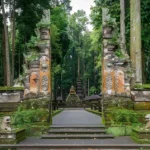
Its large courtyards, stairways, shrines and layered architecture give you a sense of the scale of Besakih. The temple rises through several levels, creating a strong visual connection between the lower courtyards and the mountain behind them.
Look for:
Tall meru towers with multiple roof tiers
Ornate shrines and temple structures
Stone stairways connecting different courtyards
Traditional split gates
Elaborate stone and carved architectural details
Mount Agung forming the wider backdrop
The central temple is also an important religious space, so not every area should be treated as an open sightseeing zone. Some spaces are reserved for worshippers and ceremonies.
2. Meru Towers and Balinese Temple Architecture
One of the most recognisable elements of Besakih is its collection of meru, the multi-tiered shrine towers found throughout Balinese Hindu temple architecture.
The number of roof tiers can vary according to the shrine and its religious significance. At Besakih, these structures create a distinctive vertical rhythm across the complex, particularly when viewed against the slopes of Mount Agung.
You will also see architectural elements that are characteristic of Balinese temples, including:
Candi bentar, or split gates
Stone guardian figures
Tiered shrines
Open courtyards
Pavilions used for religious and ceremonial purposes
Decorative carvings and stonework
Rather than viewing these details separately, pay attention to how the temples are arranged vertically across the mountainside. The architecture, elevation and mountain setting are all part of the experience.
3. The Mountain Setting
Besakih’s location is one of the reasons the complex feels different from temples you may visit closer to Bali’s coast.
The temples sit on the slopes of Mount Agung, Bali’s highest mountain, with the complex occupying a highland environment roughly around 1,000 metres above sea level.
On a clear day, the elevated position can give you broad views across the surrounding landscape, while clouds or mist around Mount Agung can create a completely different atmosphere.
The mountain is not simply scenery behind the temple. Its presence is closely connected with the spiritual significance of Besakih and helps explain why the location became such an important sacred centre.
4. The Wider Besakih Complex
One of the easiest mistakes to make is assuming that visiting Besakih means seeing one large temple and leaving.
The complex contains multiple temples with different religious associations and functions. Some are closely connected to particular communities or Hindu traditions, while others form part of the wider spiritual structure of Besakih.
You may encounter:
Smaller temple compounds
Additional meru and shrines
Ceremonial courtyards
Stone stairways and terraces
Religious offerings
Worshippers preparing for or participating in ceremonies
You do not need to visit every temple to appreciate Besakih. The scale of the complex itself is part of what makes the visit interesting.
It is also important to remember that access can differ between areas. A space that looks visually interesting may still be an active sacred area, so follow signs, local guidance and temple restrictions rather than assuming every part is open for sightseeing.
Besakih is considerably larger and more spread out than many of Bali’s individual temple attractions. Give yourself enough time to walk through the complex, take in the architecture and understand the different spaces instead of treating it as a quick photo stop.
The terrain also matters. The complex is built across a mountain slope, so you will encounter stairs, inclines and uneven stone surfaces as you move between areas.
Here’s what the visit is generally like:
Walking: Expect a reasonable amount of walking between temple areas.
Stairs: Several sections involve steps and uphill or downhill movement.
Terrain: Comfortable footwear is much more practical than sandals with little grip.
Weather: Conditions can be cooler and changeable because of the elevation.
Ceremonies: Religious activities can affect access to particular areas.
Crowds: The atmosphere can become much busier during important temple ceremonies.
Photography: Photography is generally possible in appropriate areas, but avoid photographing worshippers in a way that interferes with prayer.
Religious spaces: Some areas are restricted and should only be entered by people permitted to worship there.
Time: Allow enough time to appreciate the complex rather than rushing through the main courtyard.
Besakih Temple Dress Code & Temple Etiquette
Here’s what to keep in mind during your visit:
Wear a sarong and sash: These are required for visitors entering the sacred area.
Dress modestly: Avoid revealing clothing, particularly around the temple courtyards.
Respect people who are praying: Keep your voice low and avoid interrupting ceremonies or worship.
Stay out of restricted areas: Not every courtyard or temple space is open to general visitors.
Don’t step over offerings: Canang and other offerings are part of active religious practices.
Be thoughtful with photography: Avoid getting in the way of people praying or participating in ceremonies.
Give processions priority: If a religious procession is passing through, step aside and allow it to continue.
Follow local guidance: Besakih has specific rules for entering and moving around the sacred complex.
For international visitors, the current published entrance fee for Pura Agung Besakih is IDR 150,000 per person, while the published domestic rate is IDR 80,000. The tourist visiting area is open daily from 7:00 AM to 6:00 PM WITA.
The entrance package is more comprehensive than a basic admission ticket. According to the official tourism information, it includes:
International visitor: IDR 150,000
Domestic visitor: IDR 80,000
Sarong rental: Included
Local guide: Included
Electric vehicle transfer: One-time transfer included
The electric vehicle service is useful because Besakih spreads across the mountainside and involves considerable walking between areas.
Because fees and visitor arrangements can change, it is still sensible to confirm the latest information before setting out.
Best Time to Visit Besakih Temple
For the most comfortable visit, arrive at Besakih Temple between 7:00 AM and 9:00 AM. The morning is cooler, usually quieter, and gives you better conditions for walking around the large temple complex.
Here’s how the timing works:
7:00 AM–9:00 AM: Best for a cooler, quieter visit and exploring before the midday heat.
After 4:00 PM: A good alternative for softer afternoon light and cooler temperatures, but allow enough time before the 6:00 PM closing time.
April–October: Generally the drier period, making outdoor walking more comfortable.
November–March: Rain is more common, and wet conditions can make some stone paths slippery.
Places to Combine With Besakih Temple
Besakih works particularly well as part of an East Bali route, especially because the temple is relatively far from the main southern Bali resort areas. Instead of making the long journey for only one stop, you can build the day around destinations that follow naturally from its location.
Here’s how you can extend the experience beyond Besakih.
1. Sidemen
Sidemen is one of the most natural combinations if you want to continue from Besakih into Bali’s quieter countryside.
The area is known for rice fields, village landscapes and views toward the mountains. After spending the morning around the sacred complex, Sidemen provides a completely different atmosphere focused on rural Bali.
A practical flow is: Besakih → Sidemen → rice field or village experience
This works particularly well if you prefer landscape and local life over packing the day with major attractions.
2. Tirta Gangga
For a longer East Bali route, Tirta Gangga can follow Besakih.
The former royal water palace is known for its pools, fountains, stone structures and landscaped gardens. The contrast is useful: Besakih gives you a major religious and mountain experience, while Tirta Gangga shifts the focus toward Balinese royal heritage and garden architecture.
A fuller route could be: Besakih → Tirta Gangga → East Bali
3. Taman Ujung
Taman Ujung Water Palace is another strong choice when you want to continue toward the eastern coast.
Its ponds, bridges, gardens and former royal structures create a different visual experience from Besakih. Combining the two gives you a day that moves from sacred mountain landscape to royal heritage and coastal East Bali.
A Practical East Bali Route
If you want to make Besakih the main morning experience, a route such as:
Besakih Temple → Sidemen → Tirta Gangga can work well for a longer day. Alternatively, if you are heading toward the eastern coast:
Besakih Temple → Taman Ujung → Tirta Gangga creates a more destination-heavy East Bali itinerary.
Explore Besakih Temple With Marina Bali Tours
With Marina Bali Tours, Besakih can be incorporated into a private Bali itinerary together with destinations such as Sidemen, Tirta Gangga, Taman Ujung or other East Bali experiences, depending on the route and duration of your trip.
That gives you the flexibility to spend enough time at Besakih while connecting it naturally with the rest of your Bali journey.
Explore our Bali tour packages to see how Besakih Temple can fit into a wider private Bali experience.
Yes. Besakih is Bali’s largest and most important Hindu temple complex, set on the slopes of Mount Agung. Its appeal comes from the combination of sacred architecture, mountain scenery and its role as a living place of worship.
What should I wear to Besakih Temple?
Visitors should wear respectful clothing and a sarong and sash when entering the temple area. Shoulders and knees should be appropriately covered, and you should follow any additional instructions from temple staff.
How much is the entrance fee to Besakih Temple?
The current visitor information published by Indonesia Travel lists Besakih as open daily from 7:00 AM to 6:00 PM. Entrance fees can vary by visitor category, so checking the latest official rate before visiting is advisable.
What is the best time to visit Besakih Temple?
Early morning, around 7:00 AM to 9:00 AM, is a good time for cooler temperatures and a quieter experience. Late afternoon after 4:00 PM can also be pleasant, provided you allow enough time before closing.
How long should I spend at Besakih Temple?
Allow around 2–3 hours if you want to explore the main areas at a comfortable pace. The complex is spread across terraces on the slopes of Mount Agung, so the experience involves walking between different areas rather than visiting a single temple building.