Goa Gajah Temple is one of Bali’s most distinctive historical sites, known for its rock carved entrance shaped like a fierce mythical face. Located in Bedulu, Gianyar, just a short drive from Ubud, this archaeological complex combines an ancient cave sanctuary, carved stone features, bathing pools, and traces of Bali’s Hindu and Buddhist heritage.
Despite its name, Goa Gajah is not a cave filled with elephants. Its appeal lies in the unusual entrance, the sacred objects inside the cave, and the wider complex that extends beyond the main structure. A visit gives you a glimpse of Bali’s religious history in a setting that also includes gardens, stone stairways, and a green ravine.
If you are planning to visit, it helps to understand what you will see, how much the entrance ticket costs, what to wear, and how much time to allow. This guide covers the practical details so you can decide how Goa Gajah fits into your Ubud itinerary.
Goa Gajah Temple at a Glance
- Location: Bedulu, Blahbatuh, Gianyar Regency, Bali
- Distance from central Ubud: Approximately 5 km
- Historical background: An archaeological and religious site associated with Bali’s early medieval period
- Main highlights: Carved cave entrance, sacred cave interior, ancient bathing pools, stone sculptures, and a lower ravine area
- Entrance fee: Commonly listed at IDR 50,000 for foreign adults and IDR 25,000 for foreign children; domestic visitor rates differ
- Opening hours: Commonly listed from around 8:00 AM until late afternoon
- Suggested visit duration: Around 45–60 minutes for the main complex; allow 1–1.5 hours if exploring the lower grounds
- What to wear: Modest clothing and a sarong with a sash, following the site’s requirements
- Best time to visit: Early morning for a more comfortable visit and a chance to explore before busier periods
What Is Goa Gajah Temple?
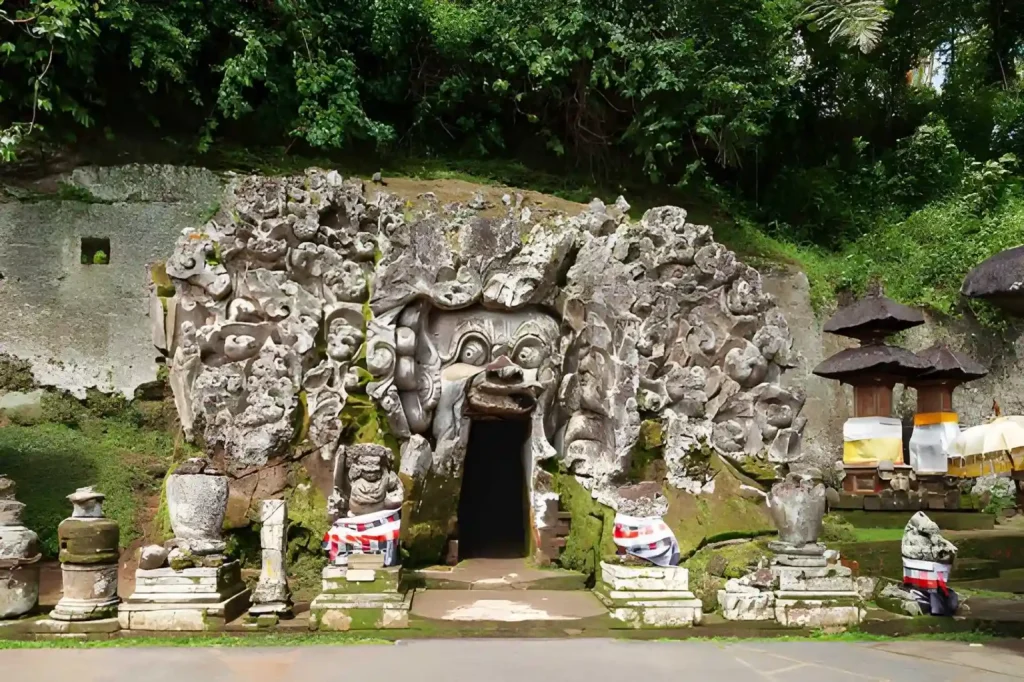
Goa Gajah, also known as the Elephant Cave, is an archaeological and religious complex in Bedulu, Gianyar. The site is best known for the large carved face surrounding the entrance to a small rock cut cave, but the complex includes more than the cave itself.
Within the cave, visitors can see religious objects associated with Hindu worship, including a statue of Ganesha and a shrine featuring lingam and yoni symbolism. Outside, the complex contains bathing pools, stone sculptures, and architectural remains that reflect the site’s long religious history.
Goa Gajah is particularly significant because Hindu and Buddhist elements are associated with the wider complex. These features offer a glimpse into Bali’s historical religious landscape, when different traditions shaped sacred places and artistic expression across the island.
The experience is different from visiting a large, open temple courtyard. The cave is relatively compact, and the most rewarding visit often involves taking time to look at the surrounding archaeological features rather than expecting to spend the entire visit inside the cave.
History of Goa Gajah Temple
Goa Gajah is generally associated with Bali’s early medieval period, with archaeological interpretations pointing to its development around the 11th century. Its exact origins and the original purpose of every feature are not fully established, so the site is best understood through its surviving structures, inscriptions, and historical references.
An Ancient Site with a Long History
The name Lwa Gajah appears in the Nagarakretagama, a Javanese literary work written in 1365 during the Majapahit period. The historical reference is one reason the site is associated with a much older religious landscape in the Bedulu area.
The complex contains features linked to Hindu worship, including the cave’s religious objects, alongside Buddhist elements found in the wider archaeological area. These remains are evidence of the varied religious traditions that shaped Bali’s history.
The name Goa Gajah is often translated as Elephant Cave. However, the origin of the name is not completely certain. The cave’s dramatic carved entrance and the presence of Ganesha, the Hindu deity depicted with an elephant’s head, are often mentioned when explaining the name.
It is useful to distinguish these interpretations from confirmed archaeological evidence. Stories about legendary figures carving the cave are part of local folklore, not established historical fact.
Rediscovery and Archaeological Research
Goa Gajah came to wider modern attention following a report by Dutch colonial official L.C. Heyting in 1923. Further investigations and archaeological work followed, including research into the cave, sculptures, inscriptions, and bathing structures.
Later excavations revealed the ancient bathing pools and additional features of the complex. These discoveries helped researchers understand that the site extends beyond the famous cave entrance and contains multiple layers of archaeological and religious significance.
Today, Goa Gajah is both a heritage attraction and a sacred place. Its historical value is inseparable from the religious traditions that continue to shape how visitors should approach the site.
What to See at Goa Gajah Temple

The cave entrance is the main visual highlight, but allow time to explore the other features around the complex. Each area offers a different perspective on its history and religious significance.
1. The Carved Cave Entrance
The most recognisable feature of Goa Gajah is the entrance carved into a rock face. A large, expressive face surrounds the opening, with wide eyes and an open mouth that creates a dramatic frame for the doorway.
The carving is often interpreted as a protective or mythical figure. Its exact identity and symbolism have been discussed by researchers, so it is better not to present one interpretation as definitive.
The entrance leads into a short, dim cave chamber. Because the space is small, visitors usually move through it relatively quickly. Take a moment to observe the rock surfaces and religious objects rather than expecting an extensive underground cave system.
2. The Cave Interior and Sacred Objects
Inside the cave, the atmosphere is darker and more enclosed than the open grounds outside. Religious objects include a statue of Ganesha and a shrine associated with Shiva worship.
The cave’s compact layout makes it important to move carefully and respectfully, especially when other visitors are inside. Follow any instructions given by site staff and avoid touching or disturbing sacred objects.
Photography may be possible in permitted areas, but it should never interfere with worship or disregard posted restrictions.
3. The Ancient Bathing Pools
Outside the cave, the bathing pools are among the complex’s most important features. They include sculpted figures that serve as water spouts, creating a distinctive arrangement of stonework and water basins.
The pools were uncovered during archaeological work in the 20th century. Their presence adds another layer to the site, showing that Goa Gajah was not simply a cave but a broader religious complex with multiple architectural features.
Although the pools are visually striking, treat them as heritage structures rather than recreational swimming facilities. Follow site rules and do not enter restricted areas.
4. Sculptures and the Lower Grounds
Beyond the main cave and pools, paths and stone steps lead towards lower parts of the complex. Depending on access and weather conditions, exploring these areas can reveal more greenery, stone remains, and the landscape around the ravine.
This lower section can feel different from the main entrance area, particularly when fewer visitors continue beyond the main attractions. However, the steps may be uneven or slippery after rain, so assess the route before descending.
If you have limited mobility or are uncomfortable with stairs, you can still appreciate the principal features near the cave and bathing pools without exploring every part of the grounds.
Goa Gajah Entrance Fee and Opening Hours
Goa Gajah is a ticketed heritage attraction. The price depends on visitor category, and published rates can change, so check the current tariff at the entrance before paying.
| Visitor category | Commonly listed entrance fee |
|---|---|
| Foreign adult | IDR 50,000 |
| Foreign child | IDR 25,000 |
| Indonesian adult | IDR 30,000 |
| Indonesian child | IDR 15,000 |
Opening Hours
Goa Gajah is commonly listed as opening at approximately 8:00 AM and closing in the late afternoon, with listings differing on whether the closing time is 5:00 PM or 6:00 PM.
For a more relaxed visit, arrive in the morning rather than planning to enter close to closing time. This gives you time to see the cave, bathing pools, and other accessible areas without rushing.
Other Costs to Consider
The entrance ticket may not cover every expense associated with your visit. Depending on how you travel, you may need to budget for:
- Parking for a scooter or car
- Transport to and from Bedulu
- Food or drinks outside the complex
- Optional guiding services, if available
A sarong and sash are generally provided for visitors who need them, but confirm the current arrangement at the entrance. There is no need to purchase one from an outside vendor unless you want your own.
Where Is Goa Gajah and How Do You Get There?
Goa Gajah is located in Bedulu village, Blahbatuh District, Gianyar Regency, approximately 5 km southeast of central Ubud. Its location makes it a practical cultural stop for travellers staying in Ubud or exploring the surrounding area.
Getting There from Ubud
If you are staying in central Ubud, the drive to Goa Gajah is relatively short under normal traffic conditions. The journey may take around 15–20 minutes, although traffic, your exact starting point, and road conditions can affect the travel time.
You can reach the site by scooter, private car, taxi, or a prearranged driver. If you are unfamiliar with Bali’s roads, a driver can simplify the journey, especially if you plan to visit several attractions in one day.
Goa Gajah has a designated visitor entrance and parking area. From there, expect to walk down steps towards the main complex rather than entering directly from the roadside.
Visiting from Outside Ubud
If you are travelling from southern Bali, allow additional time for the drive. The distance may look manageable on a map, but travel time depends heavily on traffic and your starting location.
For a visit from areas such as Sanur, Seminyak, Canggu, or the Bukit Peninsula, it generally makes more sense to combine Goa Gajah with other stops around Ubud or Gianyar rather than travelling all the way for the cave alone.
Read more: 7 Best Temples to Visit in Ubud for Culture & Spiritual Experience
Best Time to Visit Goa Gajah Temple
Early morning is a practical choice for visiting Goa Gajah. Arriving soon after opening gives you more time to explore the complex before visitor numbers may increase later in the morning.
Unlike an open landscape attraction, Goa Gajah does not depend on sunrise or sunset views. Your priority should be comfortable walking conditions, enough time to see the archaeological features, and an opportunity to explore respectfully without feeling rushed.
Morning Visits
A morning visit is generally the easiest option for most itineraries. The temperature is often more comfortable than during the hottest part of the day, and arriving early can help you avoid some of the busiest tour periods.
This is especially useful if you want to spend time observing the carvings and exploring the lower grounds rather than making a quick stop at the entrance.
Visiting During the Rainy Season
Goa Gajah can be visited during much of the year, but rain may affect the stone steps and paths around the complex. Surfaces can become slippery, especially on routes leading towards the lower grounds.
Wear shoes with good grip and take your time when using the stairs. If heavy rain makes the path unsafe, prioritise the main accessible areas or postpone the visit.
The best time ultimately depends on your itinerary, the weather, and how much of the complex you want to explore.
Dress Code and Visitor Etiquette
Goa Gajah is an archaeological attraction as well as a sacred religious site. Visitors should dress respectfully and follow the instructions displayed at the entrance and around the complex.
What Should You Wear?
Choose clothing that covers your shoulders and is appropriate for a place of worship. A sarong and sash are generally required within designated temple areas, and these are commonly available at the entrance.
Wear comfortable footwear that provides a good grip on stone steps. You may need to walk downhill and climb back up, and some surfaces can become slippery after rain.
How to Behave at the Temple
Keep your voice low around worship areas and avoid interrupting people who are praying. Do not climb on sculptures, sit on sacred structures, or touch objects that are clearly part of a religious shrine.
Follow signs and staff instructions regarding restricted areas. If a ceremony is taking place, give worshippers space and do not assume that every part of the complex is available for sightseeing.
Local customs may also restrict entry to certain sacred areas in particular circumstances. If you are unsure about a rule, ask site staff politely rather than making assumptions.
Respectful behaviour helps preserve the site’s religious significance and ensures that your visit does not disrupt the people who use it for worship.
Read more: Bali Temple Dress Code: What to Wear Before Visiting a Temple
How Long Do You Need at Goa Gajah?
For the main cave, bathing pools, and nearby features, around 45–60 minutes is a reasonable starting point. If you want to explore more of the complex, including the lower grounds and ravine paths, allow approximately 1–1.5 hours.
Your visit may take longer if you are interested in archaeological details, photography, or the religious symbolism of the sculptures.
The site is not especially large, and the cave itself is compact. Its value comes from the combination of the cave, pools, carvings, and surrounding landscape rather than the size of any single structure.
If you are visiting with older travellers, young children, or anyone who finds stairs difficult, allow extra time and focus on the sections that are comfortable to access.
Places to Visit Near Goa Gajah
Goa Gajah works well as part of a wider itinerary around Ubud and Gianyar. The best nearby stops depend on whether you prefer archaeology, cultural landmarks, or a broader sightseeing day.
1. Yeh Pulu
Yeh Pulu is a worthwhile option for travellers interested in historical stone carvings. Its long rock relief depicts figures and scenes associated with everyday life, offering a different experience from Goa Gajah’s cave entrance and bathing pools.
Because both sites are in the wider Bedulu area, they can be combined in one outing. Check local opening arrangements and ticket prices before visiting.
2. Ubud Palace and Ubud Art Market

If you want to balance archaeological sightseeing with the town’s cultural atmosphere, Ubud Palace and Ubud Art Market are useful additions. They offer a contrast to the quieter heritage setting at Goa Gajah and can be explored as part of a day in central Ubud.
Allow for traffic and parking when moving between the attractions.
Read more: 10 Spiritual Places in Ubud for Healing, Culture & Peaceful Energy
3. Tirta Empul Temple

Tirta Empul, in Tampaksiring, is another important religious site in Bali, known for its sacred spring water and purification traditions. It offers a different cultural experience from Goa Gajah and may appeal to travellers who want to learn more about Balinese Hindu practices.
The sites are not next door to each other, so plan sufficient travel time rather than treating them as a single short stop.
Read more: Tirta Empul Temple Guide: Sacred Water Purification Ritual in Bali
4. Gunung Kawi
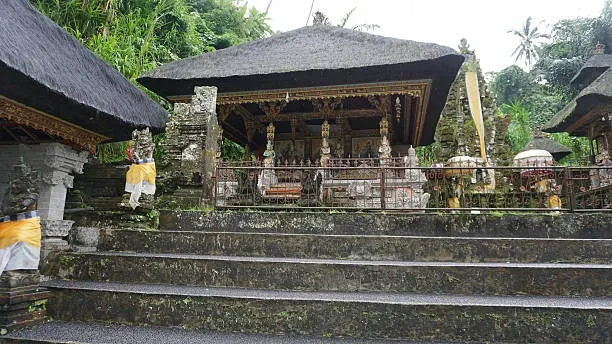
Gunung Kawi is an archaeological complex known for its monumental rock-cut shrines set within a green river valley. It is a good option if you want to explore more of Bali’s historic architecture and landscape.
The visit involves steps and walking, so consider your available time and mobility before adding it to the itinerary.
You do not need to fit all these destinations into one day. Choose two or three stops that match your interests and leave enough time to appreciate each site.
You may also want to read our related guides below:
Is Goa Gajah Temple Worth Visiting?
Yes, Goa Gajah Temple is worth visiting if you want to explore Bali’s archaeological heritage, ancient stone carvings, and religious history. The highlights include its distinctive cave entrance, sacred objects, and historic bathing pools, offering more to discover than the cave alone.
Located just a short drive from Ubud, Goa Gajah is an easy addition to a cultural sightseeing itinerary. However, the cave itself is compact, so the visit is best suited to travellers interested in history and heritage rather than extensive cave exploration.
Explore Goa Gajah Temple & More of Bali with Marina Bali Tours
Goa Gajah offers a closer look at Bali’s historical and spiritual heritage, and its location makes it a useful stop when exploring Ubud and the surrounding countryside. You can combine the visit with other cultural landmarks or scenic destinations, depending on the time you have available.
With Marina Bali Tours, you can plan a Bali sightseeing itinerary around the destinations you want to experience, with a route that makes sense for your starting point and schedule.
Explore our Bali tour packages to plan your next journey around the island.
Frequently Asked Questions About Goa Gajah Temple
The name is commonly translated as Elephant Cave, but its exact origin is uncertain. Explanations often refer to the elephant headed deity Ganesha inside the cave and interpretations of the carved entrance.
Recent listings commonly show IDR 50,000 for foreign adults and IDR 25,000 for foreign children, while domestic visitor rates are lower. Check the current tariff at the entrance before visiting.
The site is commonly listed as opening at around 8:00 AM and closing in the late afternoon. Published listings differ on the exact closing time, so confirm locally and avoid arriving close to closing.
Allow around 45–60 minutes for the main cave and bathing pools. If you plan to explore the lower grounds and ravine, approximately 1–1.5 hours is a more comfortable estimate.
Wear modest clothing, and follow the site’s requirements for a sarong and sash in designated temple areas. These are generally available at the entrance. Comfortable shoes with good grip are useful on the stone steps.
The complex contains features associated with both Hindu and Buddhist traditions. Its surviving religious objects and archaeological remains reflect the layered religious history of Bali.
The main areas may be manageable for many visitors, but the site includes stairs and uneven surfaces. Anyone with limited mobility should assess the route and avoid descending into areas that feel unsafe.
Yes. The two sites are in the wider Bedulu area and can be combined in one outing. Allow enough time for transport, walking, and exploring each location, and confirm current entry arrangements before leaving.
The ancient bathing pools are heritage features, not recreational swimming facilities. Do not enter the pools unless the site explicitly permits it.