
Kintamani is one of the places in Bali where coffee makes sense as part of the destination itself, not simply as something you order after sightseeing. In the highlands around Mount Batur, Arabica coffee is grown alongside other crops, with the volcanic landscape and mountain climate forming part of the region’s coffee identity. Kintamani Arabica is also officially protected under Indonesia’s Geographical Indication system.
A Kintamani coffee plantation tour gives you a chance to see that connection more closely, from coffee plants and ripe cherries to processing, roasting, and tasting.
Depending on the plantation or farm you visit, the experience may also include local herbal drinks, hands-on coffee activities, or Kopi Luwak. Here’s what makes Kintamani coffee different and what you can realistically expect from a visit.
What Makes Kintamani Coffee Special?
Kintamani coffee is special because its identity is closely tied to where it is grown. Arabica coffee in the Kintamani area is cultivated in the highlands around Mount Batur, where elevation, volcanic soils, local climate, and traditional farming communities all form part of the coffee’s origin.
The official geographical indication specification identifies the production area at elevations above 900 metres and links the coffee’s characteristics to this specific environment.
That matters when you visit a coffee plantation here. You’re not simply tasting a coffee that happens to carry a Bali label; you’re experiencing a product that is connected to a defined agricultural region. Here’s what that looks like in the landscape and, eventually, in the cup.
Coffee Grown in Bali’s Highland Environment
Coffee farms in Kintamani are found across the highlands around Mount Batur, generally at elevations well above Bali’s coastal areas. The official GI description places Kintamani Arabica production above 900 metres, while documented growing areas commonly extend into the 1,000 to 1,500 metre range.
The coffee is also part of a broader agricultural landscape rather than being grown in isolation. Kintamani farming traditionally incorporates other crops, including citrus, which is one of the features associated with the region’s coffee-growing system. The result is a landscape where coffee plants, fruit trees and other agricultural crops can exist together around the volcanic slopes.
That is one reason a plantation visit feels different from a standard café stop. You can see the environment where the coffee begins, rather than encountering it only after the beans have already been processed and roasted.
What Does Kintamani Arabica Taste Like?
Kintamani Arabica is generally associated with a clean cup, noticeable acidity, and citrus or fruity characteristics. Indonesia’s official geographical indication description specifies medium to high acidity, relatively low bitterness, strong aroma, and an occasional fruity character, particularly notes reminiscent of fresh citrus.
That does not mean every cup of Kintamani coffee will taste exactly the same. The final flavour also depends on the coffee variety, growing conditions, processing method, roast level, and brewing technique.
So when you taste Kintamani coffee at a plantation, pay attention to more than whether it simply tastes “strong” or “good.” You may notice a brighter acidity and citrus-like character that makes it quite different from a darker, heavier coffee profile.
Kintamani Coffee and Its Geographical Indication
Kintamani Arabica has a formal geographical identity in Indonesia. Kopi Arabika Kintamani Bali is registered as a Geographical Indication, connecting the name of the coffee to its defined production area and characteristics. Indonesia’s Directorate General of Intellectual Property lists the product under registration IG.00.2007.000001.
In practical terms, this gives you useful context when you’re visiting the area: Kintamani is not just a place where coffee happens to be grown. The origin itself is part of what gives Kintamani Arabica its identity.
The region’s traditional farmer organisation, known as Subak Abian, is also part of that agricultural story. It brings together coffee-growing communities and forms part of the traditional farming structure associated with Kintamani’s coffee production.
That combination of place, farming, coffee and local communities is what makes a Kintamani coffee plantation worth experiencing as part of a Bali itinerary, rather than treating it as just another tasting stop.
What You Can Do at a Kintamani Coffee Plantation
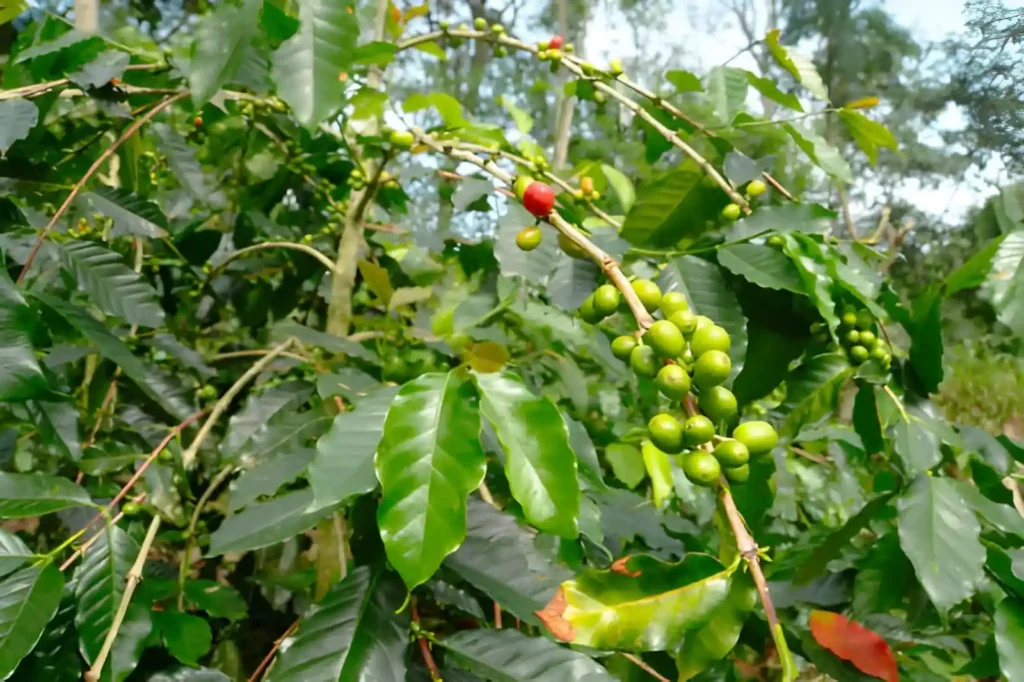
Knowing why Kintamani coffee is closely connected to its highland environment makes the plantation experience easier to appreciate. Instead of simply tasting a cup of coffee, you can see where the beans grow, understand how they are processed, and experience the landscape that surrounds the farms.
The exact activities depend on the plantation or farm you choose. Some visits are centred around a short garden walk and tasting, while others offer a more hands-on farm-to-cup experience. Here’s what you can expect when you visit.
1. Walk Through a Kintamani Coffee Farm
The most valuable part of a plantation visit is seeing coffee before it becomes coffee in your cup. Walking through the farm lets you see coffee plants growing in Kintamani’s highland environment, including the cherries that develop on the branches before they are harvested and processed.
Coffee is also part of a wider agricultural landscape here. Depending on the farm, you may see other crops growing alongside the coffee plants, while the surrounding slopes and mountain scenery give you a much clearer sense of where Kintamani coffee comes from.
Rather than treating the walk as simply a photo stop, look at the plants, cherries, farming methods, and landscape around you. That context makes the tasting later in the visit much more meaningful.
2. Learn How Coffee Goes From Cherry to Cup
A good plantation experience connects the coffee you drink with the work that happens before brewing. The basic journey is:
coffee cherry → processing → drying → roasting → grinding → brewing
The exact process can vary depending on the farm and the coffee being produced, but seeing these stages helps you understand why two coffees from the same region can still taste quite different.
Some Kintamani farm experiences go beyond a simple explanation and allow you to see or participate in parts of the process, including coffee processing, roasting, cupping, and brewing.
That hands-on element is particularly useful if you’re genuinely interested in coffee rather than simply looking for somewhere to stop for a drink.
3. Taste Kintamani Coffee
The tasting is where the agricultural story comes together. Kintamani Arabica is generally associated with bright acidity and citrus or fruity characteristics, although the flavour in your cup will also depend on the coffee, processing method, roast, and brewing technique.
What you taste at the plantation will depend on its own tasting menu. Some experiences offer several coffees or preparation methods, while others keep the tasting simpler. You may also have the opportunity to compare different roast profiles or brewing styles.
If you’re interested in understanding Kintamani coffee specifically, ask what you’re tasting rather than choosing only based on the strongest flavour. A lighter roast, for example, can make the coffee’s acidity and fruit character more noticeable than a darker roast.
4. Enjoy Coffee With Mount Batur and Lake Batur Views
One advantage of visiting a coffee plantation in Kintamani is that the coffee experience can come with a distinctly volcanic highland setting. Depending on the plantation and weather conditions, you may have views toward Mount Batur, Lake Batur, or the surrounding caldera landscape.
The setting also changes how you might want to spend your time. Instead of rushing through a tasting, you can take a little longer with your coffee while enjoying the cooler mountain atmosphere and surrounding agricultural landscape.
Just keep your expectations realistic: mountain visibility depends on weather and cloud conditions. A plantation can still be worthwhile on a cloudy day if your main interest is coffee, farming, and tasting, but the landscape views may be more limited.
Kintamani Coffee Plantation vs Ubud Coffee Plantation
Both can be a good addition to a Bali itinerary, but the experience is different. Kintamani is the stronger choice if you want the coffee-growing region, highland atmosphere, and Mount Batur landscape, while Ubud works better if you want to combine coffee with Ubud’s cultural attractions and nearby rice terraces.
| Kintamani Coffee Plantation | Ubud Coffee Plantation | |
|---|---|---|
| Main appeal | Coffee origin + highland scenery | Coffee + Ubud experiences |
| Landscape | Mount Batur, Lake Batur & volcanic highlands | Tropical valleys & rice terrace areas |
| Atmosphere | Cooler, rural, mountainous | More accessible and activity-focused |
| Best for | Coffee + scenery | Coffee + culture |
| Easy pairings | Mount Batur, Lake Batur, Tirta Empul | Tegallalang, Ubud, Tirta Empul |
| Ideal timing | Part of a full-day Kintamani route | Easy addition to a Central Bali day |
If you’re deciding based on the overall itinerary rather than coffee alone, Kintamani makes more sense when the highlands are already on your route. For a closer look at the other option, see our Ubud Coffee Plantation Tour guide.
Best Kintamani Coffee Plantation Tour Routes
Once you choose Kintamani, the plantation is best treated as one part of the day’s route, rather than an isolated stop. The right combination depends on whether you want to stay around the volcano, add a cultural experience, or continue toward Ubud.
1. Kintamani Coffee + Mount Batur Viewpoint
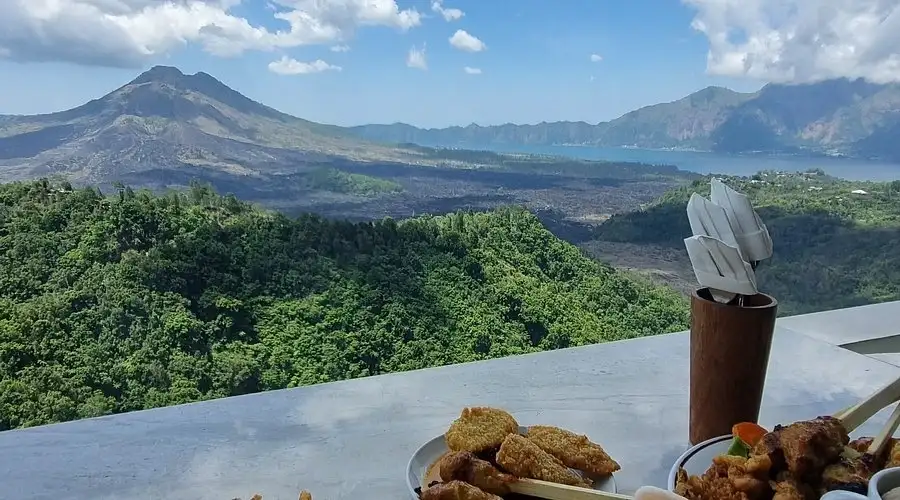
This is the most straightforward pairing if scenery is a priority. Start with the coffee plantation, then continue toward the viewpoints around Penelokan and the Mount Batur caldera for a completely different perspective of the highlands.
The contrast works well: coffee and agriculture first, followed by Bali’s volcanic landscape.
Best for: coffee + Mount Batur scenery + photography.
2. Kintamani Coffee + Lake Batur
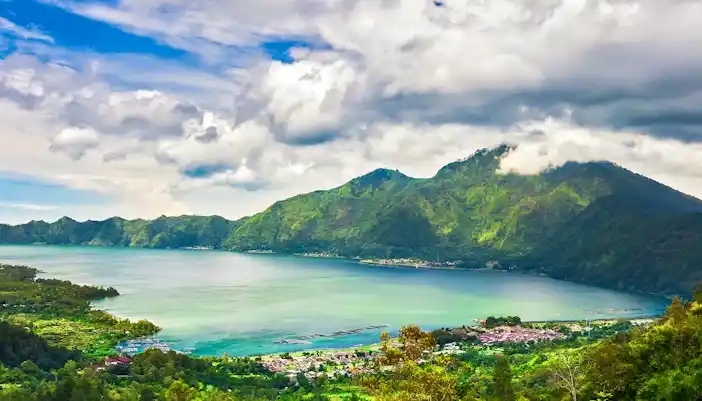
For a slower route, combine the plantation with Lake Batur and the surrounding caldera. You get more time to enjoy Kintamani’s highland landscape instead of moving quickly between unrelated attractions.
This works particularly well if you prefer a scenic day rather than a packed sightseeing schedule.
Best for: couples, photographers, and a relaxed Central Bali itinerary.
3. Kintamani Coffee + Tirta Empul
Add Tirta Empul Temple if you want to balance the coffee experience with Balinese culture. The route moves naturally from Kintamani’s agricultural landscape into a very different side of Bali’s cultural heritage.
It also gives the day more variety without relying entirely on viewpoints and scenery.
Best for: cultural experiences, couples, and first-time visits to Central Bali.
4. Kintamani Coffee + Tegallalang
You can combine Kintamani coffee with Tegallalang Rice Terrace, but this should be planned as a broader Central Bali route rather than treated as two neighbouring stops. Kintamani sits further north, so driving time can become significant, especially when traffic is taken into account.
The payoff is a day built around two distinctive agricultural landscapes: Kintamani’s coffee-growing highlands and Tegallalang’s terraced rice fields.
Best for: nature, photography, and a full Central Bali day.
5. Kintamani Coffee + Ubud
If you’re staying in Ubud, a coffee plantation can be part of a longer route that continues back toward town. After the highland scenery, you can spend the later part of the day around Ubud’s cafés, temples, art, or cultural attractions.
This gives you a useful change of pace: cooler mountain landscapes earlier in the day, followed by the more active cultural atmosphere of Ubud.
Best for: first-time visits, couples, and full-day Ubud itineraries.
For more Bali itinerary ideas, explore our related guides below:
Explore Kintamani and Bali Coffee With Marina Bali Tours
Kintamani coffee is easiest to enjoy when it fits naturally into the rest of your day. Marina Bali Tours can arrange a private route that combines a coffee plantation with Mount Batur, Lake Batur, Tirta Empul, Tegallalang, or Ubud, depending on your schedule and interests.
With flexible timing, an experienced local driver, and a custom itinerary, you can spend more time enjoying the places that matter to you without forcing too many stops into one day.
FAQs About Kintamani Coffee Plantation
Is Kintamani known for coffee?
Yes. Kintamani is one of Bali’s main highland coffee-growing areas and is particularly associated with Arabica coffee. Kintamani Arabica also has a registered Geographical Indication in Indonesia.
What does Kintamani coffee taste like?
Kintamani Arabica is commonly associated with noticeable acidity and citrus or fruity characteristics. The final flavour can vary depending on the coffee variety, processing method, roasting, and brewing technique.
Can you visit a coffee plantation in Kintamani?
Yes. Several coffee farms and plantation experiences in the Kintamani area welcome guests for activities such as farm walks, coffee tasting, roasting demonstrations, and other farm-to-cup experiences. The activities available depend on the individual plantation.
Is Kintamani coffee plantation worth visiting?
Yes, particularly if you want to understand where Bali coffee comes from rather than simply tasting it. It is also a good addition to a Kintamani itinerary because the plantation experience can be combined with Mount Batur, Lake Batur, or other Central Bali attractions.
Is Kopi Luwak available at Kintamani coffee plantations?
Some plantations offer Kopi Luwak as part of their tasting experience, but it is not available at every plantation and may come at an additional cost. If ethical sourcing matters to you, ask how the Kopi Luwak is produced before choosing to taste it.
How long do you need at a Kintamani coffee plantation?
A short plantation and tasting stop can take around 1–2 hours, while more detailed farm experiences with processing, roasting, or hands-on activities can take longer. Check what is included before planning the rest of your route.
What should you combine with a Kintamani coffee plantation?
The best pairing depends on your route. Popular combinations include Mount Batur, Lake Batur, Tirta Empul, Tegallalang Rice Terrace, and Ubud. If you want to cover several of these in one day, allow enough time for driving between areas rather than packing in too many stops.



[…] Read more: Kintamani Coffee Plantation: Coffee Tours, Tasting & What to Expect […]