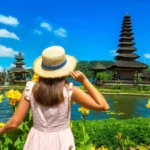
Ubud is one of the most culturally rich areas in Bali, where temples are not just historical landmarks but active spiritual spaces that are still used for daily ceremonies and community rituals. Unlike more commercial areas of the island, temple life here feels naturally integrated into everyday surroundings.
Each temple in Ubud offers a different experience, some are known for sacred water rituals, others for ancient architecture, and some for their peaceful natural setting. Here are the most meaningful temples to visit in Ubud if you want to experience its cultural and spiritual side in a more intentional way.
Why Temples in Ubud Feel Different From Other Parts of Bali
Temples in Ubud feel different because they are deeply connected to daily life, nature, and cultural tradition in a way that is still actively practiced rather than preserved only for tourism. You’ll often see offerings placed in front of homes, rice fields, and temple entrances as part of everyday rituals.
What makes Ubud especially unique is how temples blend into their natural surroundings rather than standing apart from them.
- Living cultural environment
Temples are actively used for ceremonies, not just historical sites or photo spots. - Strong connection with nature
Many temples are located near rivers, valleys, or rice fields like Tegalalang Rice Terrace. - Daily spiritual rhythm
Rituals and offerings are part of everyday life, giving the area a constant spiritual presence. - Calmer, more reflective atmosphere
Compared to busier tourist zones, Ubud temples often feel more peaceful and grounded.
This combination of culture, nature, and spirituality is what makes temple visits in Ubud feel more immersive rather than just observational.
Read Also: 10 Spiritual Places in Ubud for Healing, Culture & Peaceful Energy
Best Temples to Visit in Ubud
These temples represent some of the most meaningful cultural and spiritual experiences in Ubud. Each one has a different atmosphere, some are active ritual spaces, while others are more historical or visually iconic. Together, they show how deeply temple life is woven into daily Balinese culture.
1. Tirta Empul

Tirta Empul is one of the most well-known purification temples in Bali, famous for its holy spring water ritual called melukat. This is an active spiritual site where both local communities and visitors take part in cleansing ceremonies using a series of sacred fountains.
The experience here is structured and meaningful, not just visual. You’ll follow a specific sequence of water spouts believed to cleanse different aspects of mind and body, while the temple itself remains active with daily offerings and prayer activities.
- Sacred spring water used for traditional purification rituals
- Organized cleansing sequence through multiple fountains
- Active temple environment with ongoing local ceremonies
- Sarong required as part of respectful temple entry
What makes this place powerful is not just the setting, but the way you physically participate in a living spiritual tradition.
2. Goa Gajah

Goa Gajah is an ancient temple site that dates back to around the 9th century, combining Hindu and Buddhist influences in one location. The main highlight is the carved stone entrance that leads into a small meditation cave, creating a sense of stepping into a different time.
Beyond the cave itself, the surrounding area includes bathing pools, stone carvings, and a lush river valley that adds a natural layer to the historical experience. It feels quieter and more reflective compared to the more active ritual temples in Ubud.
- Ancient cave used historically for meditation and spiritual retreat
- Stone-carved entrance with detailed mythological reliefs
- Bathing pools and river valley surroundings
- Calm atmosphere ideal for slow exploration
This is less about ceremony participation and more about connecting with Bali’s historical spiritual roots.
3. Pura Gunung Kawi
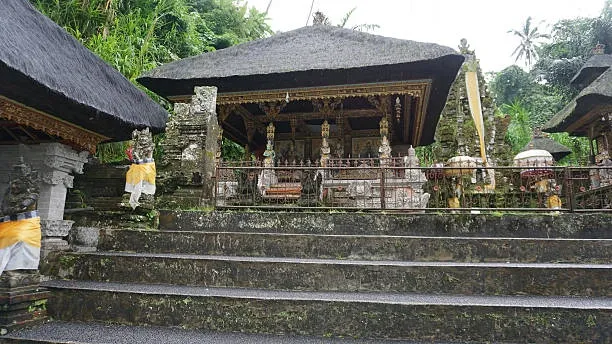
Pura Gunung Kawi is one of the most visually dramatic temple sites in Ubud, carved directly into cliff walls along a river valley. Reaching the temple requires descending a long staircase surrounded by rice fields and tropical greenery, which already becomes part of the experience itself.
Once you arrive, the scale of the stone shrines and the natural setting create a very immersive and almost cinematic atmosphere. Despite its significance, the site is often quieter than central Ubud temples, allowing a slower and more personal visit.
- Massive cliff carvings dedicated to royal Balinese figures
- Located in a deep river valley surrounded by jungle
- Long stone stair descent through rice field scenery
- Spacious and relatively peaceful temple environment
The journey down is just as meaningful as the temple itself, making it feel like a gradual transition into a sacred space.
4. Taman Saraswati Temple
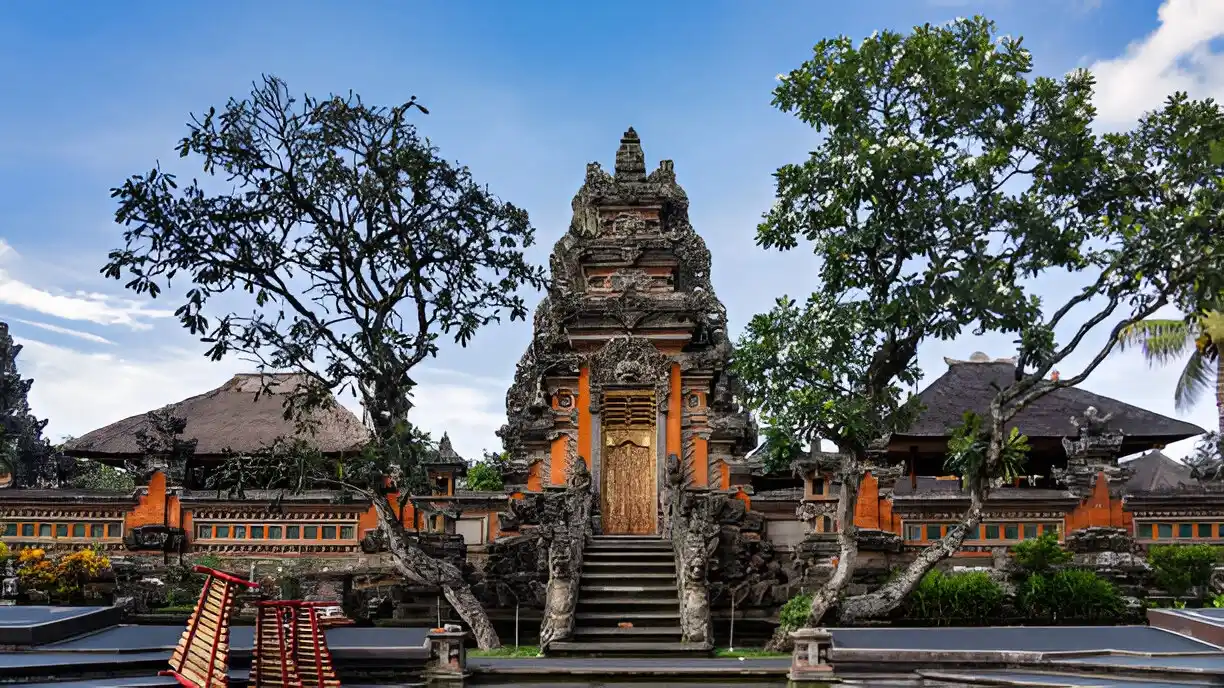
Taman Saraswati Temple is a centrally located water temple in Ubud known for its elegant lotus pond and symmetrical architecture. Unlike larger temple complexes, this site feels compact and visually calm, especially during early morning or evening hours.
The temple is dedicated to Saraswati, the goddess of knowledge and arts, which gives the space a strong cultural and creative identity. It is often visited not for rituals, but for its peaceful atmosphere and aesthetic balance.
- Lotus pond reflecting traditional Balinese temple design
- Dedicated to the goddess of knowledge and arts
- Centrally located in Ubud
- Ideal for short cultural visits and photography moments
What makes this temple special is its simplicity, everything feels balanced, quiet, and visually harmonious.
5. Tirta Empul Sebatu
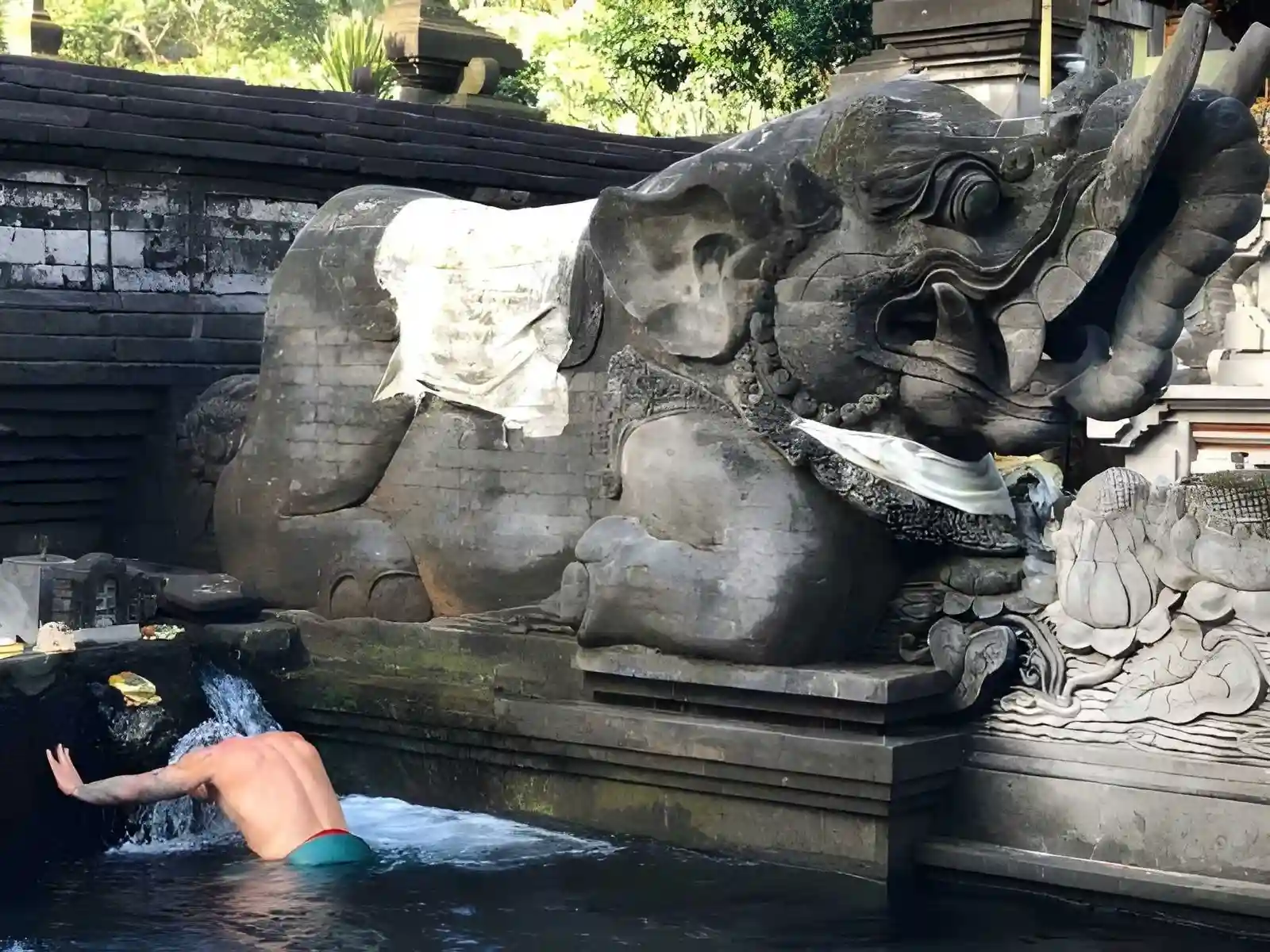
Tirta Empul Sebatu is often considered a more peaceful alternative to the more famous Tirta Empul. The purification concept is similar, but the atmosphere here feels much calmer, with fewer crowds and more natural surroundings.
The temple is surrounded by greenery and freshwater pools that are still actively used for traditional cleansing rituals. Because of its quieter setting, the experience feels more personal and reflective compared to busier spiritual sites.
- Aoly spring water used for purification rituals
- Less crowded alternative to main Tirta Empul temple
- Natural jungle surroundings with calm atmosphere
- Active local spiritual use still ongoing
This is a good choice if you want the purification experience without the intensity of a more popular temple.
6. Pura Dalem Ubud
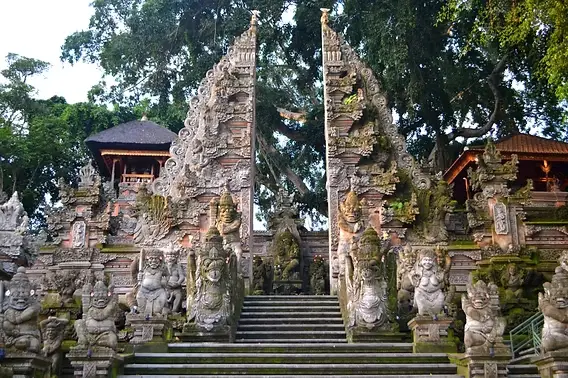
Pura Dalem Ubud is one of the central village temples in Ubud, closely connected to daily community life and ceremonial activities. Unlike temples that are mainly visited for sightseeing, this one plays an active role in local spiritual routines.
The temple is especially known for its traditional architecture and its connection to ceremonies involving life cycles and ancestral worship, making it an important cultural anchor within the community.
- Active village temple used for regular ceremonies
- Connected to ancestral and life-cycle rituals
- Traditional Balinese temple architecture
- Located close to central Ubud area
Visiting here gives a more grounded understanding of how temple life is actually practiced by local communities.
7. Pura Taman Ayun
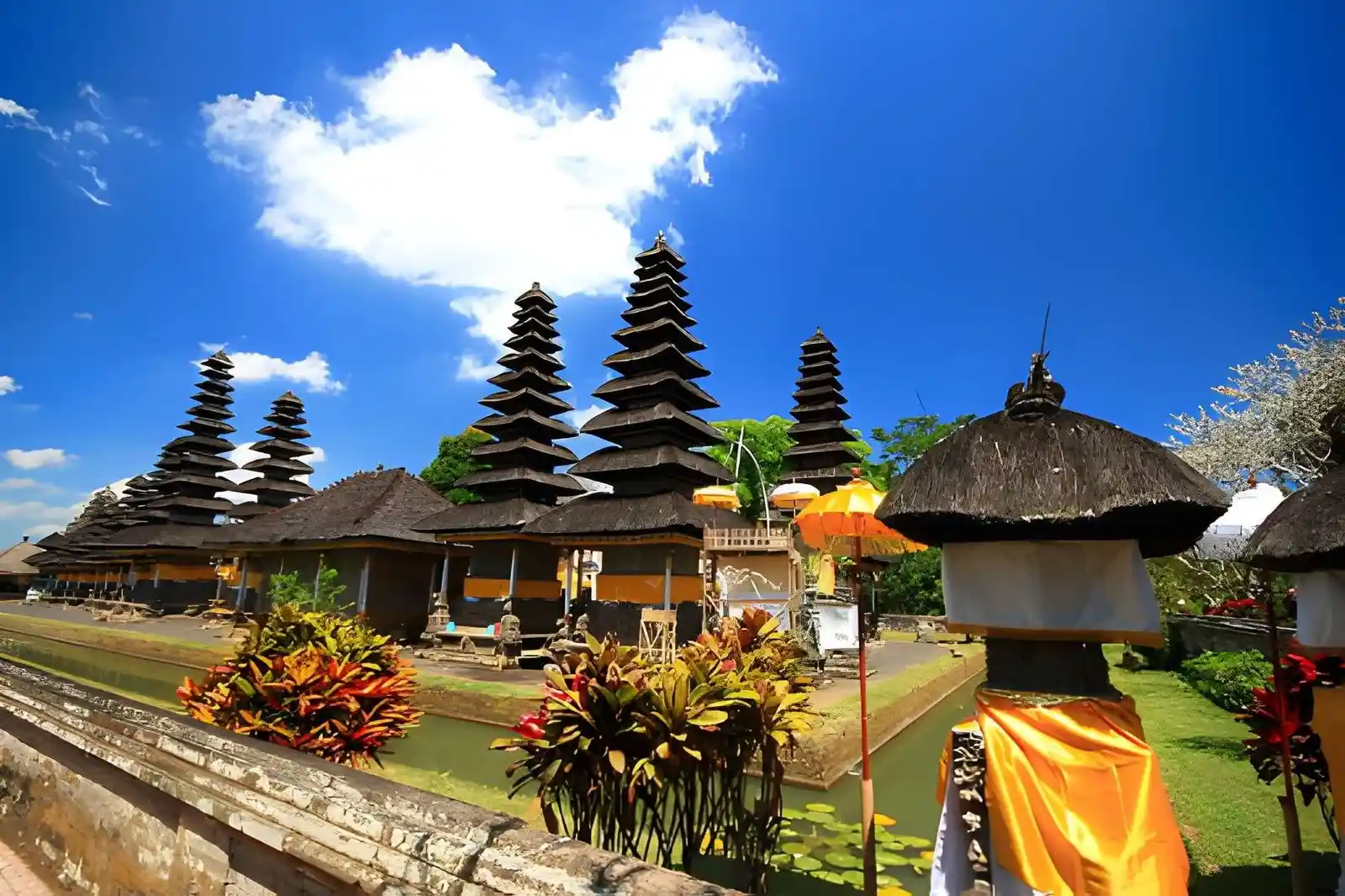
Pura Taman Ayun is a royal family temple located slightly outside central Ubud, known for its wide moat, layered shrine structures, and well-maintained garden layout. Although not directly inside Ubud center, it is often included in cultural temple routes due to its historical significance.
The temple complex is spacious and organized, giving a very different feeling compared to jungle or valley temples. It reflects the royal heritage of Bali and offers a more architectural perspective on temple design.
- Royal temple with historical Mengwi kingdom heritage
- Large landscaped complex with surrounding water moat
- Multi-layered shrine structures (meru towers)
- Quiet and spacious cultural atmosphere
This temple adds a broader cultural context to Ubud temple exploration, especially from a historical and architectural perspective.
You may also want to read this: 10+ Best Temples in Bali for a Spiritual & Scenic Experience (Complete Guide + Tips)
Travel Tips, Etiquette & Best Time to Visit Temples in Ubud
Visiting temples in Ubud is a cultural experience, so the way you prepare and behave will strongly shape how meaningful your visit feels. Most temples are still active spiritual spaces, which means respect and awareness are part of the experience, not just photography.
A little preparation also helps you enjoy the visit more comfortably, especially since some temples are located in villages, river valleys, or stepped landscapes.
Here are the key things to keep in mind:
- Dress code matters at every temple
Shoulders and knees should be covered, and sarongs are often required before entering temple areas. - Respect ongoing ceremonies
If you see offerings or prayer activities, keep distance and avoid interrupting rituals. - Best time is early morning
The atmosphere is calmer, temperatures are cooler, and lighting is better for photography and walking. - Be prepared for walking and stairs
Temples like Pura Gunung Kawi require descending and climbing steps through natural terrain. - Move slowly and observe quietly
Many temples are not just attractions, they are active community worship spaces.
These small adjustments make your experience more respectful and also help you connect more naturally with Ubud’s cultural rhythm.
You may also need to read this: Bali Temple Guide: How to Experience Bali’s Sacred Sites the Right Way
Explore Temples in Ubud With Marina Bali Tours
Exploring temples across Ubud often means moving between different landscapes, river valleys, villages, rice fields, and hillside areas. The distances between each temple can vary, and timing becomes important if you want to experience multiple places in a relaxed way.
With Marina Bali Tours, you can explore these cultural and spiritual temples in a smoother flow without worrying about route planning or transportation between locations. The experience is designed to help you focus more on the atmosphere and less on logistics.
Through our Bali Tours Package, temple visits in Ubud can be arranged into a well-paced cultural journey, combining the most meaningful spots in a natural route so your day feels balanced and unhurried.
For more cultural experiences, spiritual destinations, and travel guides across Bali, continue exploring our related articles below.
- 10+ Best Temples in Bali for a Spiritual & Scenic Experience (Complete Guide + Tips)
- 10 Relaxing Things to Do in Bali for a Peaceful & Stress-Free Trip
- Best Spiritual Experiences in Bali: Temples, Healing, Meditation and Rituals
FAQs About Temples to Visit in Ubud
What are the best temples to visit in Ubud?
The best temples in Ubud include Tirta Empul, Goa Gajah, Pura Gunung Kawi, and Taman Saraswati Temple.
Do you need a sarong to visit temples in Ubud?
Yes, most temples in Ubud require visitors to wear a sarong and dress modestly with covered shoulders and knees.
What is the most famous temple in Ubud?
Tirta Empul is one of the most famous temples in Ubud, known for its sacred purification water ritual.
Can you visit multiple temples in Ubud in one day?
Yes, most temples are within driving distance, so you can visit several in one day if your route is well planned.
What is the best time to visit temples in Ubud?
Early morning is the best time because the weather is cooler, lighting is better, and temples are less crowded.
Are Ubud temples still active for worship?
Yes, many temples in Ubud are active spiritual sites where local communities still hold daily prayers and ceremonies.