Banyumala Twin Waterfalls offers a different kind of waterfall experience in Bali. Two main streams descend side by side over a green, vegetation-covered cliff, with smaller trickles flowing across the rock face into a natural pool below. Surrounded by tropical greenery in the cool highlands of North Bali, the setting feels far removed from the island’s busy beach areas.
Located in Wanagiri Village, Buleleng Regency, Banyumala is a rewarding stop if you want to spend time in nature, photograph a distinctive waterfall landscape, or cool off in a natural pool when conditions allow. However, reaching the falls involves a downhill walk and a return climb, so the visit requires a little preparation.
Knowing how to reach Banyumala Twin Waterfalls, what the entrance fee covers, when to visit, and what to expect on the trail will help you decide whether it fits your Bali itinerary.
What Makes Banyumala Twin Waterfalls Special?

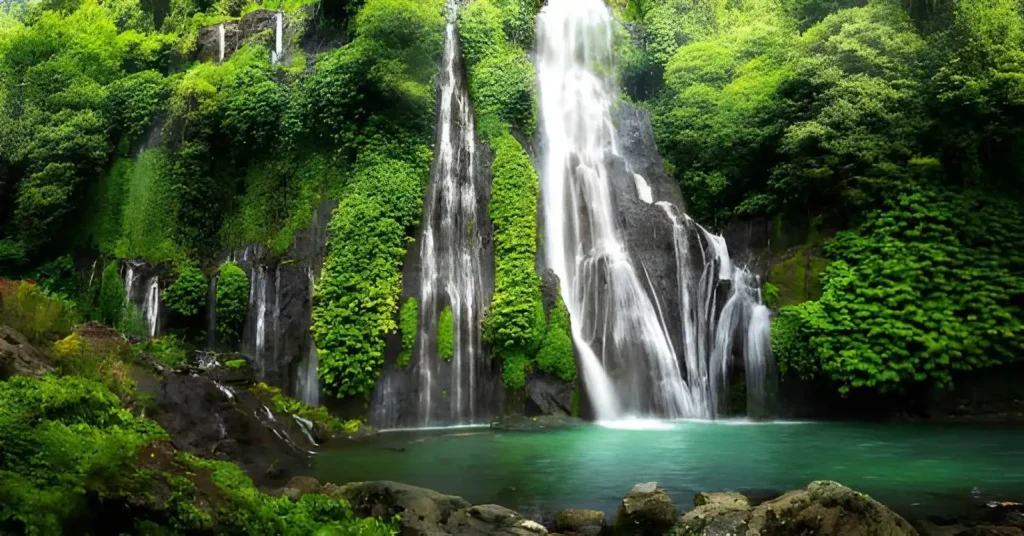
The appeal of Banyumala lies in the way its waterfalls, rock face, vegetation, and natural pool come together in one compact landscape. Rather than a single stream dropping from a bare cliff, the water spreads across a green wall before collecting in the pool below.
Two Main Cascades Framed by Tropical Greenery
Banyumala is known for its two prominent streams flowing side by side. Smaller streams and trickles can also appear along the surrounding rock face, creating a wider curtain of water rather than two completely isolated falls.
The cliff is covered in ferns, creepers, and other tropical vegetation, giving the waterfall a lush appearance. Water volume and the visible pattern of the cascades can change with rainfall and seasonal conditions.
For photography, the main pool provides a natural foreground, while the green cliff and falling water create a layered backdrop. If you want to capture the entire scene, consider bringing a wide-angle lens or stepping back to find a composition that includes both main cascades.
A Natural Pool at the Base
The pool beneath Banyumala is one of the destination’s main attractions. Visitors often come to enjoy the cool water as well as the scenery, making it different from waterfalls visited primarily for viewpoints and photographs.
Swimming may be possible when local conditions and rules allow. However, the water can be cold, the bottom may be rocky, and conditions can change after rainfall. Always check with local staff before entering the pool.
If you prefer to stay dry, you can still enjoy the waterfall from the surrounding viewing area without treating swimming as an essential part of the visit.
A Forest Walk in Bali’s Northern Highlands
Banyumala sits in the Wanagiri highlands, an area known for its cooler mountain setting, agricultural landscapes, and proximity to Lake Buyan and Lake Tamblingan.
The walk down to the waterfall takes you away from the main road and into a greener, more enclosed landscape. You will hear the water before the full view opens up, making the approach part of the experience.
This setting makes Banyumala particularly appealing if you want to combine a waterfall visit with the lakes, viewpoints, or other nature destinations around Bedugul and North Bali.
Where Is Banyumala Twin Waterfalls in Bali?
Banyumala Twin Waterfalls is located in Wanagiri Village, Sukasada District, Buleleng Regency, in North Bali’s highlands.
The waterfall lies inland from the northern coast, near the Wanagiri ridge and the Lake Buyan and Lake Tamblingan area. It is also within reach of Munduk and the Bedugul region, making it a practical stop on a broader highland sightseeing route.
From the main road, you need to follow the access route toward the waterfall’s parking area. After arriving, you will continue on foot along a descending trail to reach the cascades.
Banyumala Twin Waterfalls Entrance Fee and Opening Hours
Recent entrance fee of Banyumala Twin Waterfalls is around IDR 50,000 per person and opening hours of approximately 8:00 AM–6:00 PM. Treat these as estimates rather than guaranteed current rates, as local charges and operating arrangements may change.
| Visitor information | What to know |
|---|---|
| Location | Wanagiri, Sukasada, Buleleng, Bali |
| Estimated entrance fee | Around IDR 50,000 per person |
| Commonly listed opening hours | Around 8:00 AM–6:00 PM |
| Walking access | Downhill trail with steps and uneven sections |
| Recommended visit duration | Around 1–1.5 hours, depending on your pace |
| Payment preparation | Bring Indonesian rupiah in cash |
How to Get to Banyumala Twin Waterfalls
Banyumala is best approached as part of a trip through the Bedugul–Wanagiri–Munduk highlands or a wider North Bali itinerary. The most convenient transport depends on where you are staying and whether you want to visit other attractions along the way.
From Ubud
The drive from Ubud generally takes around 1.5–2 hours, depending on your starting point, traffic, and road conditions.
If you are planning a morning visit, leave enough time for the drive and the walk down to the waterfall. You may also want to combine Banyumala with a lake viewpoint or another nearby attraction, but avoid filling the schedule so tightly that you have to rush the return climb.
From Denpasar and South Bali
Travelling from Denpasar, Kuta, Seminyak, or Canggu usually requires a longer drive. Allow roughly 2–3 hours or more, depending on your location and traffic.
If you are staying in South Bali, Banyumala may work better as part of a full-day highland sightseeing trip rather than a short excursion. Leaving early gives you more flexibility to explore the waterfall and make additional stops.
From Lovina or Singaraja
Banyumala is also accessible from North Bali. If you are staying around Lovina or Singaraja, you can travel inland toward Wanagiri and the surrounding highlands.
The exact journey time depends on your accommodation and the route you take through the hills. Check your navigation app before setting off, and allow extra time for narrower access roads.
What to Expect on the Walk to Banyumala Twin Waterfalls
The walk to Banyumala is manageable for many visitors, but it should not be treated as a completely flat or effortless stroll. The trail descends through a forested area, with steps and uneven sections along the way.
1. The Downhill Trail
From the parking area, follow the designated route toward the ticket area and waterfall. The trail continues downhill, with steps and sloping sections that can become slippery after rain.
Take your time and wear shoes or trekking sandals with good grip. Ordinary flip-flops may be less secure on wet steps, particularly on the return climb.
2. The Return Climb
The way back is more demanding than the descent because you will be walking uphill after spending time at the waterfall. Even if the distance seems short, the incline and humid weather can make the climb tiring.
Allow enough time for breaks, especially if you are visiting with children or anyone who is less comfortable with steep paths.
3. Is the Trail Suitable for Everyone?
The route may be manageable for visitors who are comfortable walking on uneven ground, but it is not ideal for everyone. People with knee problems, balance difficulties, or limited mobility should assess the access carefully before descending.
Families with young children should supervise them closely on the steps and around the water. If the trail is wet or conditions are uncertain, ask local staff about the current route before starting.
Best Time to Visit Banyumala Twin Waterfalls
For the best balance of comfortable walking conditions and time to enjoy the natural pool, plan your visit to Banyumala Twin Waterfalls for a weekday morning during a relatively dry period. Bali’s dry season generally runs from April to October, although rainfall can still occur in the highlands throughout the year.
The main factor to consider is recent weather, not just the month on the calendar. Rain can make the downhill trail slippery and affect water clarity, while a drier spell generally makes the walk easier to manage.
Best Time of Day to Visit
Arriving around 8:00–10:00 AM is a practical choice for a morning visit. Banyumala is commonly listed as opening at 8:00 AM, and starting early gives you more time to explore the waterfall, enjoy the surroundings, and make the uphill walk back without rushing.
Here is what to consider when planning your arrival:
- Early morning (around 8:00–10:00 AM): A good window for a relaxed visit before visitor numbers may increase. Cooler conditions can also make the return climb more comfortable.
- Late morning to early afternoon: The waterfall may become busier as more visitors arrive, particularly during holidays and peak travel periods. Allow extra time if you plan to swim or take photographs.
- Late afternoon: This can be an alternative if your schedule is flexible, but check the current closing time and leave enough daylight for the return walk. Do not begin the descent close to closing.
These time windows are practical guidelines, not guarantees of quiet conditions or ideal lighting. Visitor numbers vary by day, and cloud cover in the highlands can change quickly.
Best Season to Visit Banyumala Twin Waterfalls
Dry Season (April–October)
The dry season is generally a practical period for visiting Banyumala because prolonged rainfall is typically less frequent than during the wetter months. When the trail has had time to dry, the steps and uneven sections may be easier to navigate.
Why consider this period?
- Walking conditions may be more manageable.
- The natural pool may be clearer when there has been little recent rainfall.
- It can be easier to plan a waterfall visit alongside other highland attractions.
However, dry-season conditions are not guaranteed. Shaded steps can remain damp, and recent rain can still affect the trail and pool.
Wet Season (November–March)
The wetter months can bring stronger water flow and lush vegetation, making the twin cascades look fuller. The trade-off is that the access trail may become muddy or slippery, while the pool can turn cloudy after heavy rain.
Keep these points in mind:
- Allow more time for the downhill walk and return climb.
- Wear footwear with reliable grip and move carefully on wet steps.
- Check whether swimming is appropriate before entering the pool.
- Avoid the water if the current is strong, the water level is rising, or the pool looks unusually muddy after heavy rain.
Do not choose the wet season solely for a more dramatic waterfall. If rainfall has made the trail or pool unsafe, postpone the visit and follow local advice.
Practical Tips for Choosing Your Visit Time
- Check recent rainfall: Conditions over the previous day or two can affect the trail and water clarity.
- Visit on a weekday if possible: This may help you avoid some of the busier periods, although crowds are never guaranteed to be low.
- Start early: Leave enough time to enjoy the waterfall and complete the return climb before closing.
- Bring suitable footwear: Shoes or secure sandals with good grip are more appropriate than loose flip-flops on uneven, wet steps.
- Ask before swimming: Confirm local conditions and any restrictions with staff when you arrive.
- Keep your itinerary flexible: If heavy rain develops or the trail becomes unsafe, do not force the visit just to keep to your schedule.
For most visitors, a weekday morning during a relatively dry spell is the most practical choice. It gives you a better chance of enjoying Banyumala at a comfortable pace while leaving room to adjust if the weather changes.
Looking for more waterfalls to explore in Bali? Discover these beautiful waterfall destinations and find the next stop for your Bali itinerary.
Can You Swim at Banyumala Twin Waterfalls?
Banyumala’s natural pool is a popular reason to visit, and swimming may be possible when conditions are suitable and local rules allow it. However, the pool should not automatically be considered safe simply because other visitors are in the water.
Before swimming, check the following:
- Water conditions: Avoid entering if the current is strong, the water level is rising, or the pool looks unusually muddy after heavy rain.
- Depth and footing: The bottom can be rocky and uneven, and depth may vary across the pool.
- Local guidance: Ask staff whether swimming is permitted and whether any areas should be avoided.
- Personal ability: Enter only if you are comfortable in natural water and can manage the conditions safely.
Do not jump from the surrounding rocks or stand directly beneath a strong cascade. If conditions are unsuitable, enjoy the waterfall from the shore and save swimming for another time.
Places to Visit Near Banyumala Twin Waterfalls
Banyumala works well as part of a highland sightseeing route because several natural and cultural attractions are located around the Wanagiri and Bedugul region. Choose stops that fit your route rather than trying to visit everything in one day.
1. Lake Buyan and Lake Tamblingan
The Twin Lakes area is one of the most relevant additions to a Banyumala visit. Lake Buyan and Lake Tamblingan sit in the northern highlands, surrounded by forested hills and cool mountain scenery.
You can visit designated viewpoints to appreciate the lakes from above. The landscape provides a contrast to Banyumala’s enclosed waterfall gorge and makes a good addition to a nature-focused itinerary.
Read more: Lake Tamblingan Bali: A Guide to the Quiet Highland Lake
2. Wanagiri Viewpoints
Wanagiri is known for viewpoints overlooking the surrounding highlands and lakes. Some locations offer constructed photo spots, while others focus more directly on the landscape.
If you enjoy scenic photography, consider stopping at a viewpoint before or after Banyumala. Check the location of each stop and any admission charges rather than assuming all viewpoints are part of one attraction.
3. Ulun Danu Beratan Temple
Ulun Danu Beratan is a well-known lakeside temple in the Bedugul area. Its setting beside Lake Beratan makes it a distinctive cultural and landscape destination.
It can be combined with Banyumala if you plan your route carefully, but the two are separate attractions and require additional driving. Allow enough time for the waterfall walk before adding a temple visit to your schedule.
Read more: Ulun Danu Beratan Temple Guide to Bali’s Iconic Floating Lake Temple
4. Munduk
Munduk is a highland area known for forested landscapes, plantations, and other waterfall destinations. It is worth considering if you want to spend more time exploring North Bali’s inland scenery.
Because Munduk covers a wider area, check travel distances before selecting individual stops. A focused itinerary is usually more enjoyable than trying to fit several waterfalls into a single rushed day.
Read more: 10 Best Things to Do in Munduk for Waterfalls, Lake Views & Highland Nature Experiences
5. Banyu Wana Amertha Waterfall
Banyu Wana Amertha is another waterfall destination in the Wanagiri area. It is known for multiple cascades and a green forest setting, making it a natural option for visitors who want to explore more waterfalls.
However, it is a separate attraction with its own access route and entrance arrangements. Check current conditions and fees before including it in the same itinerary.
Practical Tips for Visiting Banyumala Twin Waterfalls
A little preparation can make your visit more comfortable, especially if you want to spend time near the water.
- Wear footwear with good grip. The downhill trail and return climb can be slippery after rain.
- Bring drinking water. The uphill walk can be tiring in warm, humid conditions.
- Pack a change of clothes. Useful if you plan to swim or get wet from the waterfall spray.
- Protect your phone and camera. Use a waterproof pouch or dry bag near the pool.
- Bring cash in Indonesian rupiah. Entrance fees and parking charges may be collected separately.
- Check the weather before leaving. Heavy rain can affect the trail and water conditions.
- Ask before swimming. Confirm local rules, water levels, and safe areas with staff.
- Allow time for the return climb. Do not schedule your next stop too tightly.
- Respect the natural surroundings. Take your rubbish with you and avoid disturbing the vegetation or wildlife.
If the trail is unsafe or the pool is unsuitable for swimming, follow local advice. The waterfall is still worth appreciating from a safe viewing area.
Explore Banyumala Twin Waterfalls and Bali with Marina Bali Tours
Banyumala Twin Waterfalls is a rewarding choice if you want to experience Bali’s highland scenery beyond the usual beach itinerary. The twin cascades, green rock face, and natural pool make it a destination where you can slow down, enjoy the surroundings, and spend time in nature.
If you want to combine Banyumala with the Twin Lakes, Ulun Danu Beratan Temple, or other places around North Bali, plan the route around the time you need at the waterfall and the driving distance between stops.
At Marina Bali Tours, you can explore Bali through sightseeing experiences that bring together the island’s natural attractions, cultural landmarks, and local character. Choose the destinations you want to see and plan a journey that gives you time to enjoy each stop.
Explore our Bali tour packages to find an option for your trip and plan your time discovering Bali’s highlands and beyond.
Frequently Asked Questions About Banyumala Twin Waterfalls
Banyumala Twin Waterfalls is located in Wanagiri Village, Sukasada District, Buleleng Regency, in North Bali’s highlands. It is near the Lake Buyan and Lake Tamblingan area.
Recent travel guides commonly list an entrance fee of around IDR 50,000 per person. Treat this as an estimate and confirm the current fee, parking charges, and included facilities before visiting.
Many visitor guides list opening hours of approximately 8:00 AM–6:00 PM. Check with the local operator before travelling because operating hours can change.
Allow around 1–1.5 hours for the walk down, time at the waterfall, and the return climb. Your visit may take longer if you swim, take photographs, or need additional breaks.
Swimming may be possible in the natural pool when local conditions and rules allow. Check the water level, current, and safety guidance before entering, especially after heavy rainfall.
The route includes a downhill walk with steps and uneven sections, followed by an uphill return. It is manageable for many visitors but may be challenging for people with limited mobility or difficulty walking on slippery surfaces.
A weekday morning during relatively dry weather is a practical choice for a more relaxed visit. However, trail conditions, water clarity, and crowd levels vary, so check the weather and local conditions before going.
Wear comfortable clothing and footwear with good grip. If you plan to swim, bring a change of clothes and a secure waterproof bag for your belongings.
You can consider the Lake Buyan and Lake Tamblingan viewpoints, Wanagiri viewpoints, Ulun Danu Beratan Temple, Munduk, and Banyu Wana Amertha Waterfall. Choose stops based on your starting point and available travel time.